
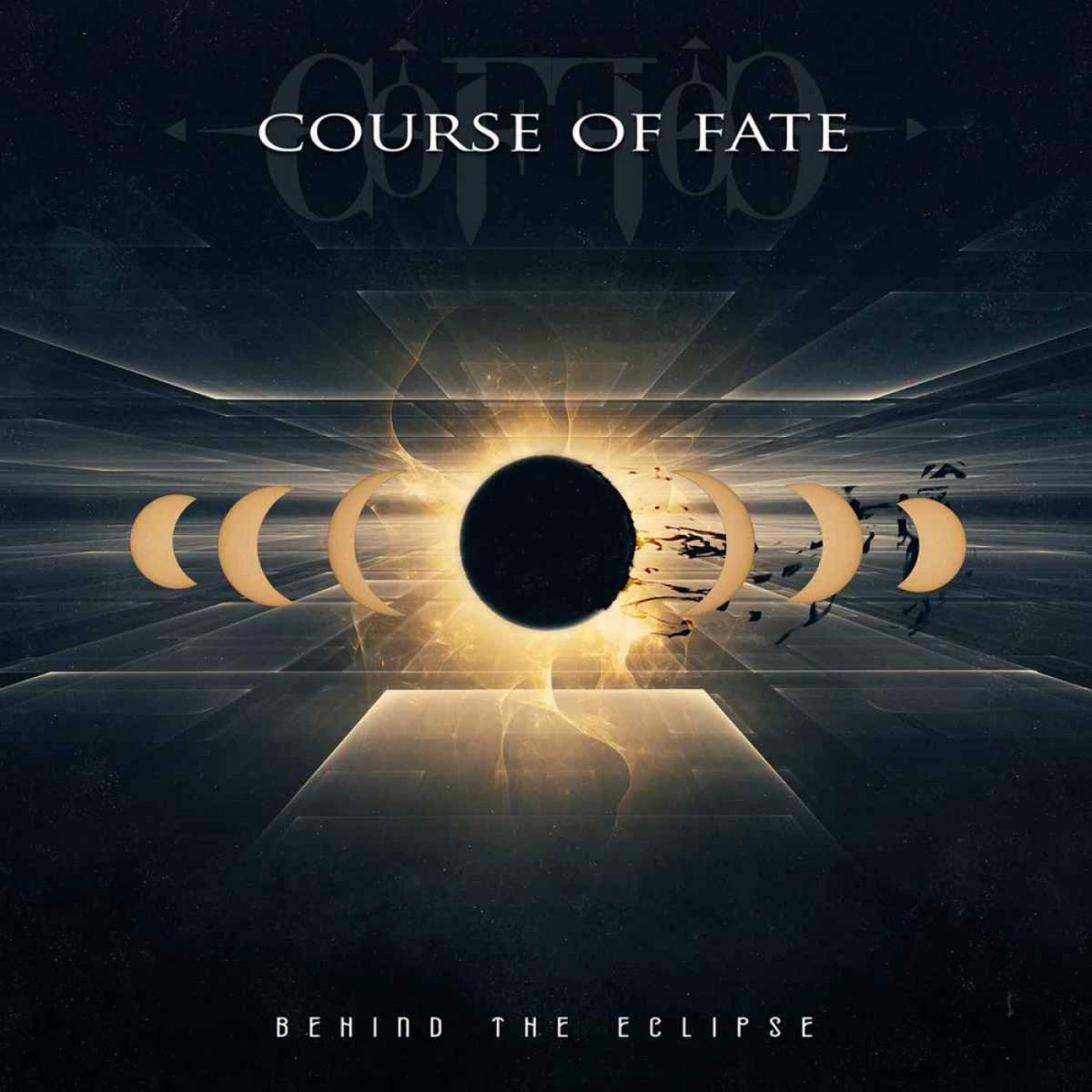
Norwegian collective, Course of Fate, remember a time when heavy metal was epic and empowering, and that includes the progressive metal of Savatage and the early Dream Theater records. Yet they know that prog will always present existential quandaries in both musical and lyrical themes. They start 2026 with the third album of their career in good shape. It seems that body and mind are aligned for Behind the Eclipse.
“We carry your heavy cross / The empty burden of your own loss,” is the ambiguous message in opening mood piece, ‘Memories’. The low-tuned guitars crash into the room in the following title-track like crumbling floodgates. Choral keyboards add a heroic dimension to the action. The first verse only begins when the bass emerges from the intro unscathed and ready to sketch the outlines for the vocals to follow. Here, Eivind Gunnesen relies on a tremendous stamina to bellow the words in his tenor voice. “When this world is out to get you / And you’re about to lose control / When you’re reaching for the lifeline / Don’t you know you’re still alive?” Course of Fate see no need to hide their dramatic impulses when the guitarists step on the distortion pedal, yet they eschew flamboyance in favour of mood. Their approach is quite minimalistic, including the prolonged calm at the four-minute mark until the stadium rock solo comes to life at five minutes and forty-five seconds. Clearly, they know how to stir the soul of the listener while baring their own in an emotional resonance worthy of Pain of Salvation. It makes the transition to a crunchy metal workout in the finale even more satisfying.
Glittering pianos move among the drop-tuned guitars like fireflies in ‘Sky is Falling’. Gunnesen goes for the belting tenor approach rather than scream or growl his way through this aggressive passage of play. Per-Morten Bergseth’s drums belong in the pompous era of 1980s prog rock, as do the shameless weeping of the lead guitars. Like all good bands, Course of Fate can shift to a higher semitone with ease when the song demands it. The most surprising aspect of this music is the persistence of a tranquil calm fighting for space underneath the heavy guitars and thunderous drums. You can guarantee it’ll break into the open for the verse parts before disappearing again when the chorus replaces it in track four (see ‘So It Goes’). The vocal acrobatics are impressive when the dynamics reach their highest point of elevation.
Of course, these guys can play. They allow the technical metal aspects to flourish in ‘Acolyte’. This group are at their best when the guitar and bass diverge in rhythm but unite in aggression. The pompous keyboards are essential to produce the epic sound that motivates them to write music. Using the synths like an edgy Depeche Mode hook in ‘Hiding from the Light’ is even better. Recreating it with a palm-muted guitar line creates a recurring motif for you to use as your guide through the choppy wates. They’re not averse to using wailing death metal vocals here before the inevitable release in the chorus. But this is prog metal, which means bassist, Torstein Guttormsen, has thirty seconds of free rein on his fretboard during the quieter moments.
Keeping this opus to forty-five minutes is a triumph of discipline. Piano-driven efforts like ‘Don’t Close Your Eyes’ rely on the cello presets and sporadic guitar embellishments to work around the introspective vocals. “All these days, I’ve waited for changes / Don’t close your eyes and dream of tomorrow,” muses Gunnesen. We need a sustained storm of riffs and busy drums for closing track, ‘Neverwhere’, but Course of Fate choose to ration the excitement. Their singer is the most reluctant to lead the charge until his lungs open at 02:20 for the first attack. Yet the band seem too caught up in the moment to recognise the needs of the listener. Only at the four-minute threshold do the guitars establish a dominance of sharp rhythms. The switch to a Helloween power metal approach will second-guess your instincts as will the fist-pumping chug riffs that follow.
Behind the Fate is easier to digest on the second and third listen. There’s a lot for you to discover if you revisit it with an enquiring mind.
Kirk Houghton
Verdict

Release Date: 30/01/2026
Record Label: ROAR! / Rock of Angels Records
Standout tracks: Behind the Eclipse; Acolyte; Hiding from the Light
Suggested Further Listening: Aeons – The Ghosts of What We Knew (2024), Witherfall – Curse of Autumn (2021), Advocacy – The Path of Decoherence (2025)