
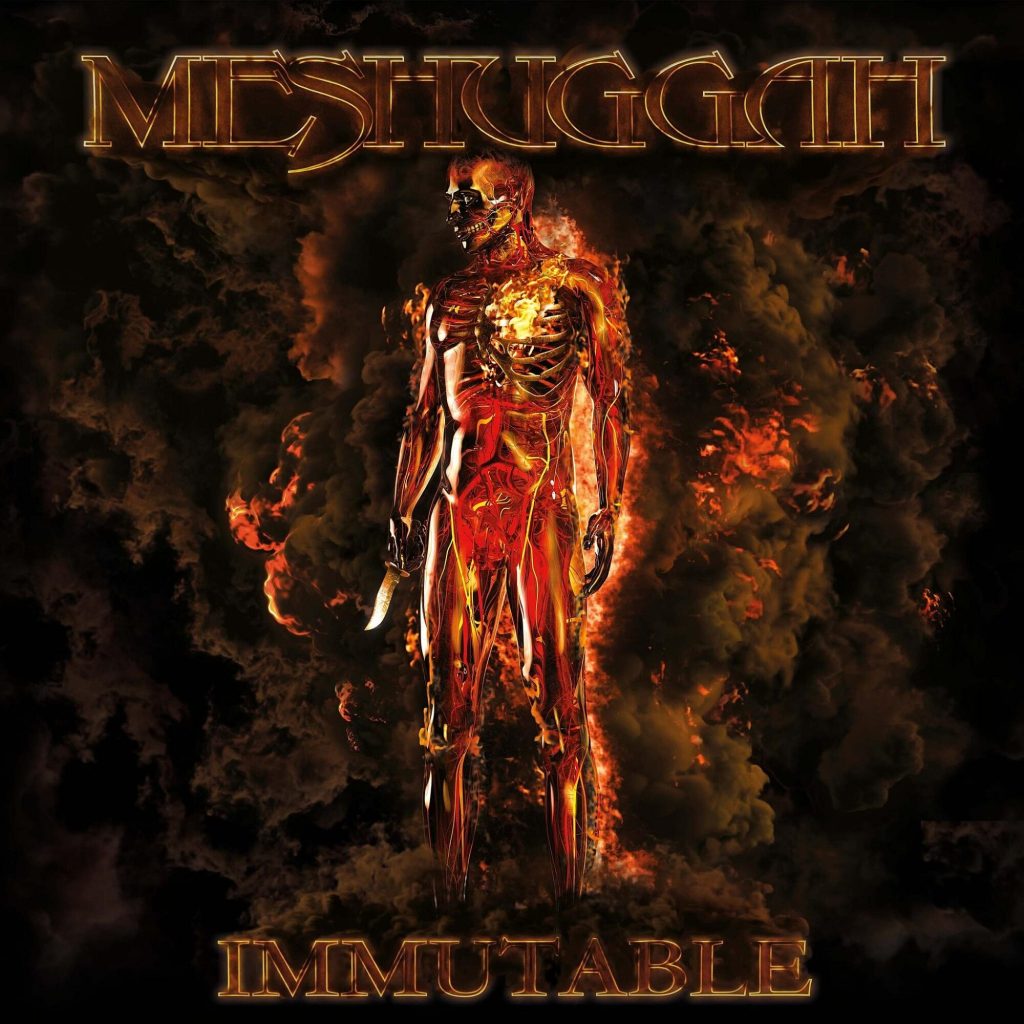
The most influential metal band on the planet are back with their ninth album, and the chances are you either venerate their towering inspiration on modern music or curse them for ushering in two generations of homogenous copycats. It’s six years since The Violent Sleep of Reason puzzled us, yet not much has changed. Metalcore and deathcore bands continue to imitate Meshuggah when they need a new direction; prog metal artists base their rhythm sections on the Swedish giants; and death metal groups looking for a new identity still plump for the eight-string guitar as the symbol of their rebirth. You can’t escape the grip of Meshuggah if you try, so what do they have in store for us in 2022?
How does one hour and seven minutes of heavy guitar chugging, mischievous drum patterns and muscular scream vocals sound to you? Those that spent the last two decades trying to make sense of Meshuggah will appreciate this record, but it will be more of an effort for those that sit on the side-lines and take their enjoyment no further than the band’s iconic ‘Bleed’ video. Remember: this is a band that write no choruses and make a virtue of machine-like repetition as part of their charm.
Opener, ‘Broken Cog’, is a typical Meshuggah mindfuck with an atypical vocal approach. Jens Kidman uses a spoken word technique for most of the song, but you’re busy counting the drum meter and shivering under the might of the staccato guitars to notice. You start to acclimatise when he rips into his trademark rasp and the second layer of guitar reaches for the slow semitone ascendancy, but you’re right to ask how this song finishes so soon despite its five-and-a-half minutes. It’s easy to see why they selected ‘The Abysmal Eye’ as the lead single, and it follows on here with great cogency. Fans of the band’s classic 1995 album will appreciate the thrash approach and the return of the weird finger-tapping solos of Frederik Thordendal. Now you can feel the arteries in your eyes expanding with crimson red fury.
Perhaps the band’s unwillingness to write a chorus or deviate away from their formula of chugging riffs and complex drum patterns leaves them isolated in an avant-garde bubble few can define or understand. ‘Light the Shortening Fuse’ is hypnotic enough to retain your attention, and ‘Phantoms’ introduces the first polyrhythm of the LP with its deliberate misalignment of guitars and drums in the opening passage. The former leaves little trace of its destruction, while the latter invites you to play a game of “Where will the snare drum land?” when you should be getting into the groove. Of course, this is the genius of the band, but it can also be tiring. ‘God He Sees in Mirrors’ falls into the meme of sounding like a riff they concocted during the soundcheck. Instead of the “one, two” test of the microphone, it’s the “0-1-1-1-0” of the guitar strings. (Did someone say this was complex music?)
You’d hope an hour’s worth of this sonic bludgeoning will encourage a progressive approach, and the structure of Immutable does not disappoint once you understand it. ‘They Move Below’ (track seven) is the anchor point of the album. Those intimidated by the prospect of thirteen songs can use this as their refresher break. Nine minutes of brooding multi-layered guitars built on the introspection of clean chord progressions should sound monotonous, but this instrumental is the palette cleanser you need to swim back to shore. It makes the second half of Immutable much more invigorating. You might even conjure that invincible feeling of the Chaosphere era when you hear ‘Kaleidoscope’. Did Andreas Kisser (Sepultura) once say that you don’t need to tune down to be heavy? Mmm… This might not hold true in 2022. Imagine Meshuggah taking the red mist of Lamb of God while retaining their Allan Holdsworth influences. ‘I Am That Thirst’ is just as good and can rival anything from the band’s 2001 Nothing album. And, of course, they give us a quasi-thrash metal puzzle on at least one of the remaining songs in the form of ‘Armies of the Preposterous’. A Spike Jonze video would work wonders here with a compilation of malfunctioning military tanks sputtering under every drop-tuned guitar chord.
The band avoid the trap of self-parody on Immutable, which is commendable considering how many artists copy them. That fear that they might sound like they’re covering one of their own songs is always at the back of your mind, yet their main weakness is their stubborn determination to dazzle you with monotonous repetition. How many metal groups can be so atavistic but so captivating at the same time? The decision to embrace the eight-string guitars in 2001 was a turning point for Meshuggah, but it also ended their affiliation with thrash metal. Many of the riffs here rely on the asphyxiating might of the low-end strings for power and punch, and Jens Kidman does little to offer variation when you need something to cure the vertigo.
Guitarist, Mårten Hagström, said he wanted this record to be their Reign in Blood, but they ended up giving us something nearer to Tool’s 10,000 Days. The highlights are momentous, but the focus is too one-dimensional to justify a glowing appraisal. Immutable is a good record, but it leaves you bloated.
JVB
Verdict

Release Date: 01/04/2022
Record Label: Atomic Fire
Standout tracks: The Abysmal Eye, They Move Below, Kaleidoscope
Suggested Further Listening: Gojira – Fortitude (2021), Tool – 10,000 Days (2006), Frontierer – Oxidized (2021)