
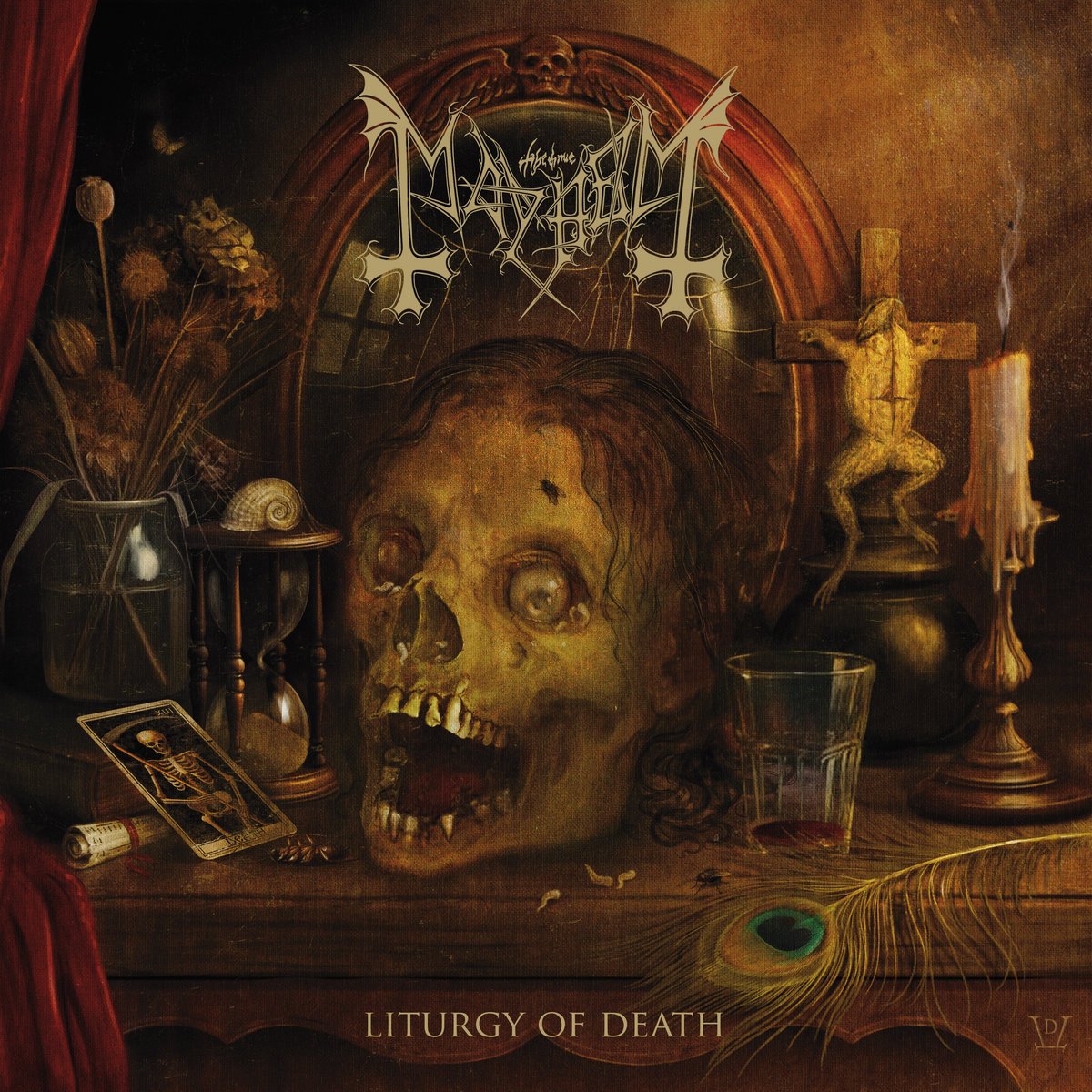
Mayhem have a strong consensus for the best black metal album of all time. Everybody should know 1994’s De Mysteriis Dom Sathanas, but everybody should be willing to look beyond the praise and make up their own mind. Is it as perfect as the consensus want you to believe? Maybe 2000’s avant-garde opus, Grand Declaration of War, is the best in their repertoire. Or what about the primitive savagery of their 1987 Deathcrush EP? Whatever the merits of these arguments, it’s doubtful album number seven will figure in these discussions. Liturgy of Death sounds subdued compared to the contemporary black metal artists that rip them off and want to be them.
That’s not to say the thrills are absent when you press play. ‘Ephemeral Eternity’ presents the delight of unknown expectations. Ominous tom drums group together like an execution ceremony and open the way for a doom metal passage to emerge. The chords are dissonant, the note groupings unmelodious enough to convince you the grim reaper is behind you. Only at the two-minute mark do the blast beats and atmospheric field recordings merge under the ghastly whisper of Attila Csihar’s breath. The febrile mood of this song is its greatest strength, though you wouldn’t call it “heavy” by any modern criteria. Evil, yes, but brutal – no. Take out the heroics of Hellhammer blasting his way through the sixteenth notes, and the dynamics would lose their metallic potency.
Unfortunately, the blast beats in ‘Despair’ drown out the guitars. The dry plug-in amp tone does not help either. Would we be interested if this came out today in the name of a new band? Probably not, though you might feel like you’re walking through a graveyard with a fortune teller’s prophecy in your ear and a bottle of vodka in your hand. Imagine how much heavier this would be if it had Emperor recording and mixing it in the studio. The material is good, but its execution is patchy. Only in the final three minutes do the band rip at your face with their bare hands and remind you why 1987’s Deathcrush is an extreme metal classic.
It’s a good idea to carry on with the vicious audio assault in ‘Weep for Nothing’. Attila Csihar’s animated vocal shrieks are lower in range than most. Seven-minutes of alternating between 260 bpm black metal and atmospheric doom could be cut to five here. The guitarists use their chord accents like crash cymbals, so you can catch their sharp hiss on your skin. But what happened to the experimental impulse of this band? This is 1994 revisited but with cleaner production. There are thousands of bands that sound like this in 2026, all of them plagiarising Mayhem and Emperor. But that doesn’t mean it’s any more interesting because it comes from the hands of the original pioneers.
At its best we might reach for the term “mystical extreme metal”, but the vocals often resemble the babbling of an evil sorcerer from those costume drama movies that Hollywood stopped making after the 1980s. The guitars are too thin in the mix, which means it’s easy to overlook the imagination of their chord choices and ghoulish trill techniques. Small flashes of brilliance appear in ‘Funeral of Existence’ when all musicians reach peak velocity, but this is too reliant on the force of the drums.
Perhaps the most impressive thing is how you can imagine where the keyboards would be if they needed them. The quest to inject terror into the heart of the listener is successful in ‘Realm of Endless Misery’. Listen how the discordant guitar intervals hallucinate like a sudden glitch of the brain, even if it sounds more like Emperor’s 1994 debut than their own record from that seminal year. Likewise, ‘Propitious Death’ is as brutal as its title suggests. Here, they give us some crunchy riffing and a guitar-drum combination that’s more violent than a tribe of cannibals with a Caucasian woman in their sights. Observe the string-grinding butchery when the sixteenth note fury kicks in. This is a rare moment of exquisite bloodlust on an album that often misfires.
Death metal might be boring these days, but it soars above Mayhem’s insistence that extreme music should be steeped in atmospheric hostility and give you goosebumps.
Kirk Houghton
Verdict

Release Date: 13/02/2026
Record Label: Century Media
Standout tracks: Ephemeral Eternity, Realm of Endless Misery, Propitious Death
Suggested Further Listening: Imperium Dekadenz – Into Sorrow Evermore (2023), Schattenfall – Oh Wind, mein Bruder (2025), …And Oceans – As in Gardens, so in Tombs (2023)