
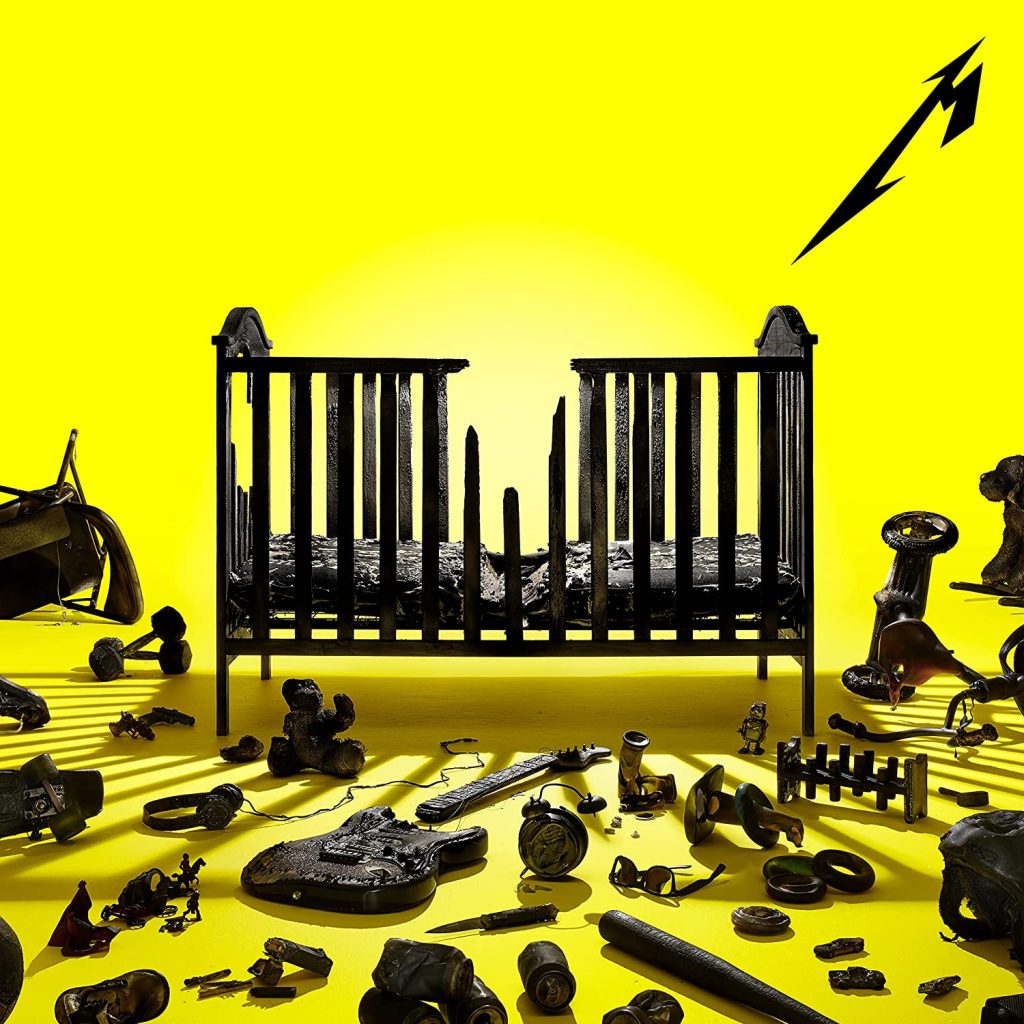
A Metallica album is like a football world cup. It occurs on a cycle rather than every summer and creeps up on you when so much has happened in the interim. Everyone can agree that a new record from the fifth-biggest selling musical artist in the sound scan era is the most important event in the rock and metal industry. Metallica have made a lot of money for a lot of people. The economic opportunities they present to a host of suppliers and secondary retailers during a world tour should not be understated. Of course, they’re rich. Filthy rich. Their record company love them and will be planning their budget for next year on the back of the projected earnings generated by 72 Seasons. The minimum expectations are that it will hit the number one spot in at least forty countries, but what does it mean to the metal fan who loves their first five albums and has no time for anything post-1991?
Scream Blast Repeat could not ignore a new album from Metallica. This is the band that invented thrash metal. They produced two albums – Master of Puppets (1986) and the ‘Black album’ (1991) – that are as close to perfection as anything in metal. They might attract a lot of hate for the wrong reasons and receive an excess of praise from sycophantic critics, but James Hetfield and the boys approach their eleventh album with questions of when they will retire ringing in their ears. Let’s be clear: Metallica are not in danger of becoming a dad rock band. They know that the second chance afforded to them by returning to thrash metal on 2008’s Death Magnetic will continue to serve them well. It might explain why the first three tracks here go heavy on the chunky riffing and vigorous drum tempos.
The opening title track is seven minutes and thirty-nine seconds of heavy metal heaven with a sequence of riffs that will make you dust down the air guitar and clench your jaw. You can always rely on James Hetfield to deliver in the rhythm guitar department, and he doesn’t disappoint here with a nod to ‘Damage Inc’ and the swagger of the Black album along the way. Is it better than Megadeth’s opener from last year? Yes. Does it rock? Of course, it does.
You wonder if 72 Seasons is the best thing since 1991 on the evidence of ‘Shadows Follow’ and ‘Screaming Suicide’. The former starts with a staccato pounding and an orgasmic second guitar plugging the gaps. Lars Ulrich makes the most of a two-beat drum pattern in the main verse, but Hetfield steals the show with a youthful vocal phrasing in the chorus and a head-spinning chug riff in the middle eight. The band work up a stomp on the journey to the chorus of the latter in the spirit of Megadeth’s ‘502’ from 1988. All good so far, but can they keep this up for one hour and seventeen minutes?
In fairness, 72 Seasons might be too long for its own good and unaware of innovations in the metal landscape over the last two decades, but the song writing standard is first class. No band does the extended intro better than Metallica. Listen to the playful guitar brutality at the beginning of ‘Sleepwalk My Life Away’ as they navigate through a bridge, pre-chorus, and chorus to reach the glory of a lingering Alice in Chains epiphany. Layne Staley’s influence crops up again on ‘You Must Burn!’, where the band aim for ‘Sad but True, Part II’ but end up with something closer to Angel Witch in the Dave Tatum era. This is thrash metal kitted out in sunglasses with an extra minute added on to allow Kirk Hammett to have his fun on the guitar neck and Rob Trujillo to test out his pedal board effects.
These indulgences start to backfire after track six (‘Lux Æterna’) where the band settle into a comfortable Black album tempo. This is not a problem when the songs are as muscular as ‘Crown of Barbed Wire’ or as forceful as ‘Chasing Light’. Hetfield and Hammett fret the meanest of fifth chords on the former and leave a trail of menacing smoke signals behind on the stadium stomp of the latter. ‘If Darkness Had a Son’ subsists on a basic diet of crunchy guitar incursions, but you might question why they need over six minutes to dazzle you when five would suffice. The same thing happens on ‘Room of Mirrors’ as the penultimate track. This song cannot decide if it wants to be hard rock or thrash and satisfies neither camp. ‘Too Far Gone?’ is the definition of a filler. The Covid lockdowns might have given them more time to ignore the noise of daily life and focus on song writing, but these quarantines also removed their sense of perspective. Nothing justifies going beyond one hour on this LP.
Even the most uncritical among the Metallica fanbase (and there are millions of them), might look at the eleven-minute running time of album closer, ‘Inamorata’, with a sense of fatigue. This should test your stamina, but the breath-taking honesty in the lyrics and clever use of misery as a metaphor for longing make it clear that Hetfield’s separation from his wife of twenty-five years dealt him a blow from which he might not recover. Other than Megadeth’s ‘In My Darkest Hour’, there’s nothing in the thrash metal canon that addresses the listener with such a candid broken heart. It’s a magnificent way to end the album and one that deserves praise for baring its soul with such dignity and fragility.
72 Seasons will exceed your expectations, but it’ll also remind you that Metallica’s outside counsel do not have the listener’s best interests at heart. Any other band could have kept four of these songs behind for a future album or the next EP, but this is Metallica, and they’re a money-making machine with too many people invested in their commercial success. There are no such things as studio outtakes or rare tracks in the Metallica camp because they’re difficult to monetise, yet some of them would be better off in this category.
JVB
Verdict

Release Date: 14/04/2023
Record Label: Blackened Music / Universal
Standout tracks: 72 Seasons, Shadows Follow, Screaming Suicide
Suggested Further Listening: Venom – The Waste Lands (1992), Alice in Chains – Facelift (1990), Angel Witch – Screamin’ ‘n’ Bleedin’ (1985)