
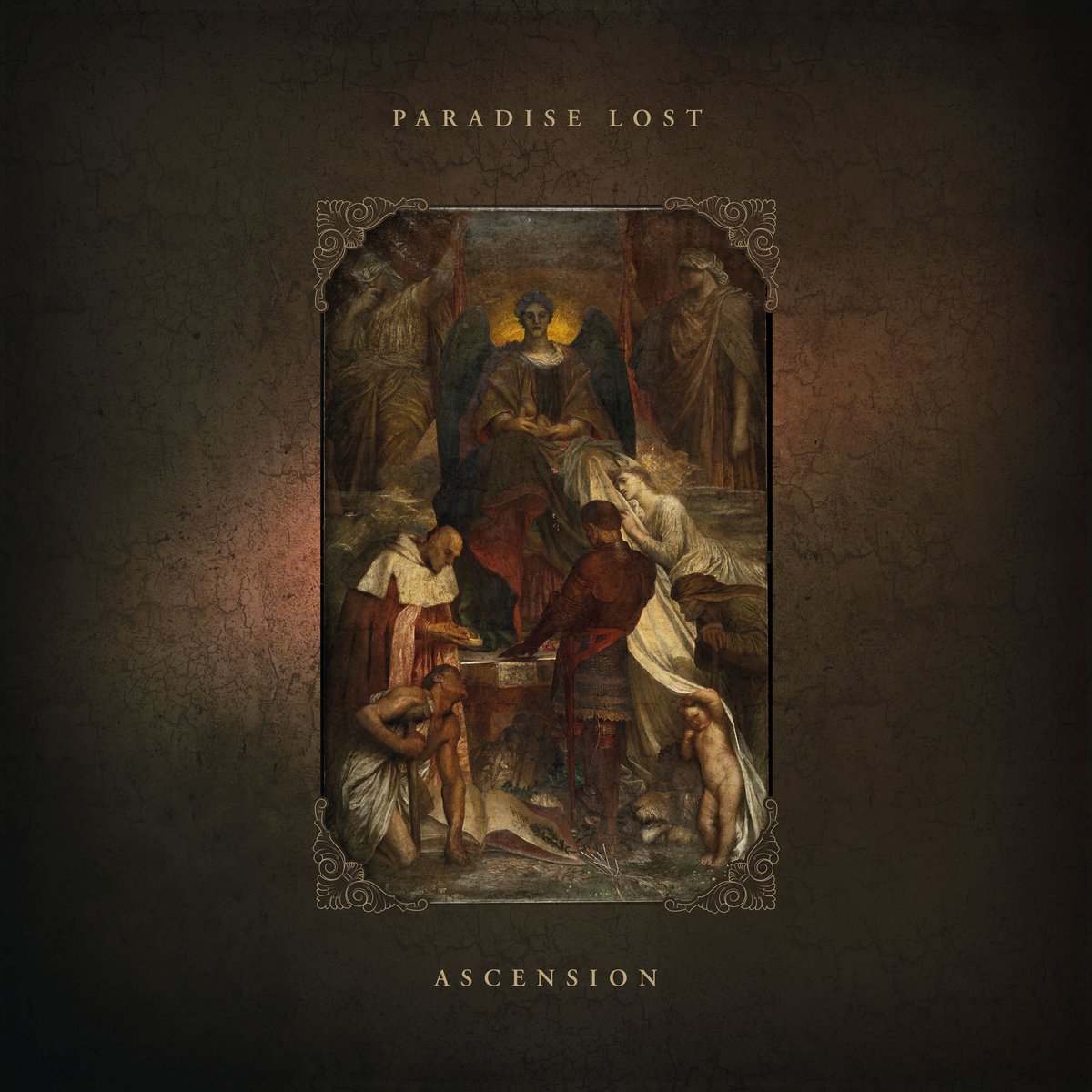
Paradise Lost are in an elite club of metal artists alongside Carcass and Sepultura that invented two genres. In their case, gothic metal gathered its seeds from their 1991 Gothic LP, and their 1990 debut has received a re-appraisal over the last decade to earn the privilege of being the first ever death-doom record (see Lost Paradise). Now on album number seventeen with seventeen hundred bands still imitating their sound to this day, the Yorkshire crew are ready to enjoy the fruits of their fifth decade. As the first full-length studio recording since 2020, expectations are high.
The imperious bass trombone from the Gothic era sets the scene in ‘Serpent on the Cross’ for a venomous stab of death-doom drowned in amp gain but coloured with the signature melodies higher up the fretboard. Long-time fans will be delighted that Nick Holmes approaches it like the man who resurrected his gory death metal personality for 2015’s The Plague Within. One listen to Gregor Mackintosh’s use of the extended legato technique in the solo is enough to create a sense of déjà vu from the Icon period of the band’s career. We can forgive this when there’s so much quality to draw from and revitalise. Paradise Lost are at their best when they sound malevolent, yet you can also hear their love of Trouble and Pentagram underneath the red eyes and gritted teeth.
Of course, the Yorkshiremen gave up on the idea of filling stadiums and the pockets of their record company patrons after 2002’s Symbol of Life, which means they find it easy to reach the heart of those that love them as a metal band. ‘Tyrants Serenade’ could be from any album from their 2005 self-titled record to the present. The droning power chords, dexterous high-register guitar patterns, and advanced grasp of a melodic chorus come easy to them here. Longform compositions do not. The solemn doom metal of ‘Salvation’ showcases some charismatic singing in the chorus but nothing of vigour to match. Ironically, it’s the willingness to return to the malicious tone of their first two albums that leaves this song in limbo. Paradise Lost were never a doom metal band, but they’ve allowed this narrative to evolve as if they had no hand in creating the gothic metal genre that elevated them into the pop charts back in the 1990s. An honourable attempt to escape the straitjacket of a verse-chorus structure would be worthy of applause here if they could get it off the ground.
Yet the moments of quality on Ascension are high. ‘Silence Like the Grave’ is as good as anything they’ve written since 2009’s Faith Divides Us, Death Unites Us. Listen to the fervency of the Holmes-Mackintosh partnership here as the former’s husky voice complements the harsh crunch of the guitar lines. By contrast, a rare strum of acoustic guitars and cello phrasings gives Holmes the chance to take centre stage in ‘Lay A Wreath Upon the World’. He does this with a sensitive whisper before handing over the drama to a spellbinding female harmony for the transition to the louder dynamics. It’s another composition that lays importance on the chorus without making all roads lead to it from the same direction.
Few legendary metal bands struggle to follow side A of a record with an invigorating side B like Paradise Lost (see Icon, Draconian Times, Tragic idol, etc.). But this is not quite the case on Acsencion, where only one filler appears at track nine (‘Deceivers’). ‘Savage Days’ is an interesting affair. The blissful water drops of the keyboard allow Holmes to dig into his register like the man who delivered a career-defining performance on 1997’s One Second. Mackintosh is just as successful in imposing his electric guitar over this delicate balance. And then there’s the Metallica angle that served them so well in the mid-1990s when they conquered mainland Europe. They’re not afraid to embrace the Black album when the pace accelerates in ‘Diluvium’ as if it’s ‘Once Solemn’ again from 1995’s Draconian Times. Likewise, ‘Sirens’ is yet another reminder that Paradise Lost could go toe-to-toe with Hetfield and Co. in the 1990s and can still do so in 2025.
Closing track, ‘The Precipice’, is the song for the encore when everybody needs to catch their breath and find a reason to stay. Here, Holmes sings with a furrowed brow in the verse and growls his way through the bridge to the chorus, and you expect it to stay this way until the speakers boom with a new guitar line at 02:25. Observe how it transforms into a refined piece of evil death metal like Opeth at their scariest. Extending it by an extra minute to accommodate the same guitar solo Mackintosh has been playing since 1993 is unnecessary. But you can overlook the odd stumble or indulgence when a world class metal outfit enter the thirty-seventh year of their existence. This is a triumphant return after five years away.
JVB
Verdict

Release Date: 19/09/2025
Record Label: Nuclear Blast
Standout tracks: Serpent on the Cross; Silence Like the Grave; Lay A Wreath Upon the World
Suggested Further Listening: Scar of the Sun – Inertia (2021), Jade – The Pacification of Death (2022), Novembers Doom – Major Arcana (2025)