
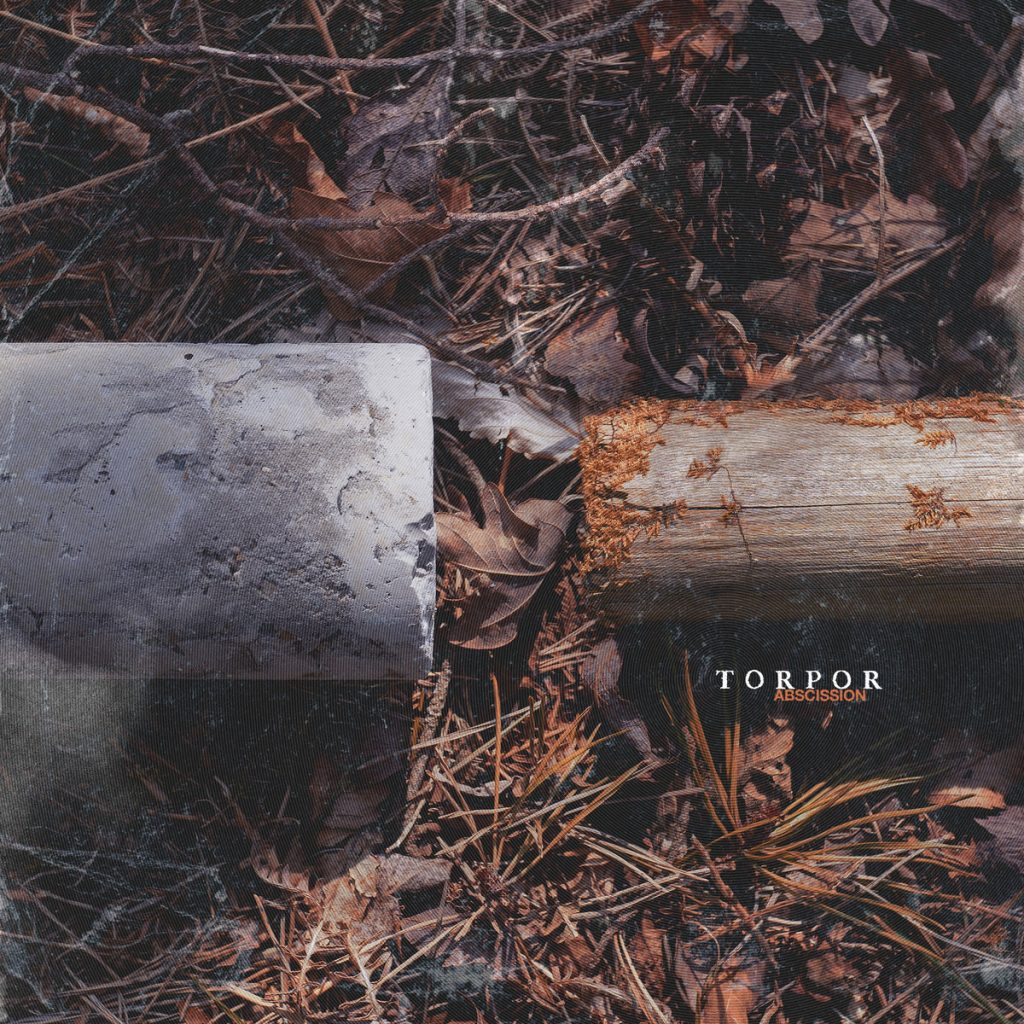
Bristol trio, Torpor, wanted to change their approach for album number three, so they packed their gear into a car and travelled to Giant Wafer Studios in rural Wales with no lyrics and little in the way of finished songs. The idea was that the isolation of the Welsh hills would inspire them on both fronts. Why bother with obsessive pre-production and intricate arrangements when the music can write itself through the force of its environment? And who would hear if they droned through the walls of the recording studio? It’s an experiment that deserves a documentary, but it will do little to encourage tourism to the Welsh valleys if we are to judge the outcome by the mood of this record. Torpor’s final product is like a low frequency take on the power electronics of English noise innovators, Whitehouse, but with raw studio drums.
There’s nothing cinematic here unless you consider a long camcorder suicide as entertainment, in which case this would be the ideal soundtrack. Torpor’s music captures the essence of a dismal existence, but it’s a dark existence that has the courage to contemplate mortality. It seems flippant to describe this as introspective. We all have moments of self-reflection. Abscission is the distressing recognition that death will claim us in the end. Opener, ‘Interior Gestures’, lets the fuzz and feedback pave the way for an earth-shattering drone of simple fifth chords and patient drumbeats. The chord changes are almost indistinguishable in this cacophony of electricity and distortion. A bass guitar might be operating somewhere in this overflow and could even be providing most of the amp gain, but you cannot be certain until the two-minute mark. All three members take to the microphone in individual moments of anguish, which makes it hard to tell whose throat rasps the hardest. Only when bassist, Lauren Mason, enters near the end with a spoken word passage can we detect her distinctive voice. By this point, the guitars abandon the mix like a soul leaving the body after one last push of oxygen to the brain.
The low frequency overdrive running through ‘As Shadow Follows Body’ will make you wonder what a post-metal version of Conan might sound like – the answer is primitive and ugly. Here, Jon Taylor’s two-note guitar sequence froths like a steam turbine in need of an inspection. Godflesh fans will appreciate this as much as those that rate the first two Swans albums (1983’s Filth and 1984’s Cop) as their finest output. A sluggish attempt at a staccato jolt at 03:30 conjures images of a machine that refuses to die once you cut the electricity. The barbarous growls and scream uplifts will leave you with two millimetres less of your nails on each finger. You think the song will peter out after five minutes, but monotonous semi-distorted guitar chords and humming atmospherics keep it going until they gear up once more into a tumult of groaning doom metal for the finale.
Two things make the slow tempo of this record inevitable. One, the idiosyncrasies of the genres that inspired it – sludge, doom, drone, post-metal. Two, the nature of the experiment. You should expect it to be a long and agonising experience when bands like Torpor improvise in the studio. They don’t have the chops of jazz musicians or the positive energy of prog virtuosos to make things up on the spot as if working in telepathic understanding. Nor should they attempt to. Their aesthetic suits the black and grey textures of their music.
Why is something so slow and primitive so captivating? That’s the question here. You wouldn’t call ‘Accidie’ a vortex waiting to suck you into its darkness. If anything, it’s an unapproachable void that will push you back if you get too close. Taylor’s guitar has even less melody than a blow torch. The power electronic hostilities and faint tom drums of ‘Carbon’ aim to create the audio equivalent of an agoraphobic panic attack. It’s the music the blacksmith hears when he removes his ear defenders. Ouch!
You should be depleted and demoralised by the time you reach closing track, ‘Island of Abandonment’, yet the ten minutes and fifty-nine seconds subject your eyeballs to truths they’d rather not see. You can’t help but stay engaged. Taylor’s one-note down-strum of guitar in the first two minutes of the song lingers like an invisible gas waiting to put a barricade around your lungs. Vocal screams ache as if the person behind the gruelling outcries has a sword impaled through his lower vertebrae. It’s hideous in its menace, but it throbs with a real pathos. The drums become more agitated as the song progresses. If anything, the bass replaces the guitar as a mainstay of the timekeeping operations, when the snares fade and the song threatens to end at 04:50. Then, the near silence does more damage to your ear drums than the presence of the out-of-tune guitar strokes. An industrial drum pattern emerges from this crime scene with low bass guitar infractions that will make your throat swell. It’s not pretty, but it makes you feel, uh… alive – somehow.
Album-of-the-year this is not, but it might be the experiment of the year. You need to experience Abscission at least once to test your pain threshold.
JVB
Verdict

Release Date: 15/09/2023
Record Label: Human Worth
Standout tracks: Interior Gestures, Accidie, Island of Abandonment
Suggested Further Listening: Conan – Revengeance (2016), Sulphur Nurse – Roopkund (2022), Mairu – Sol Cultus (2023)