
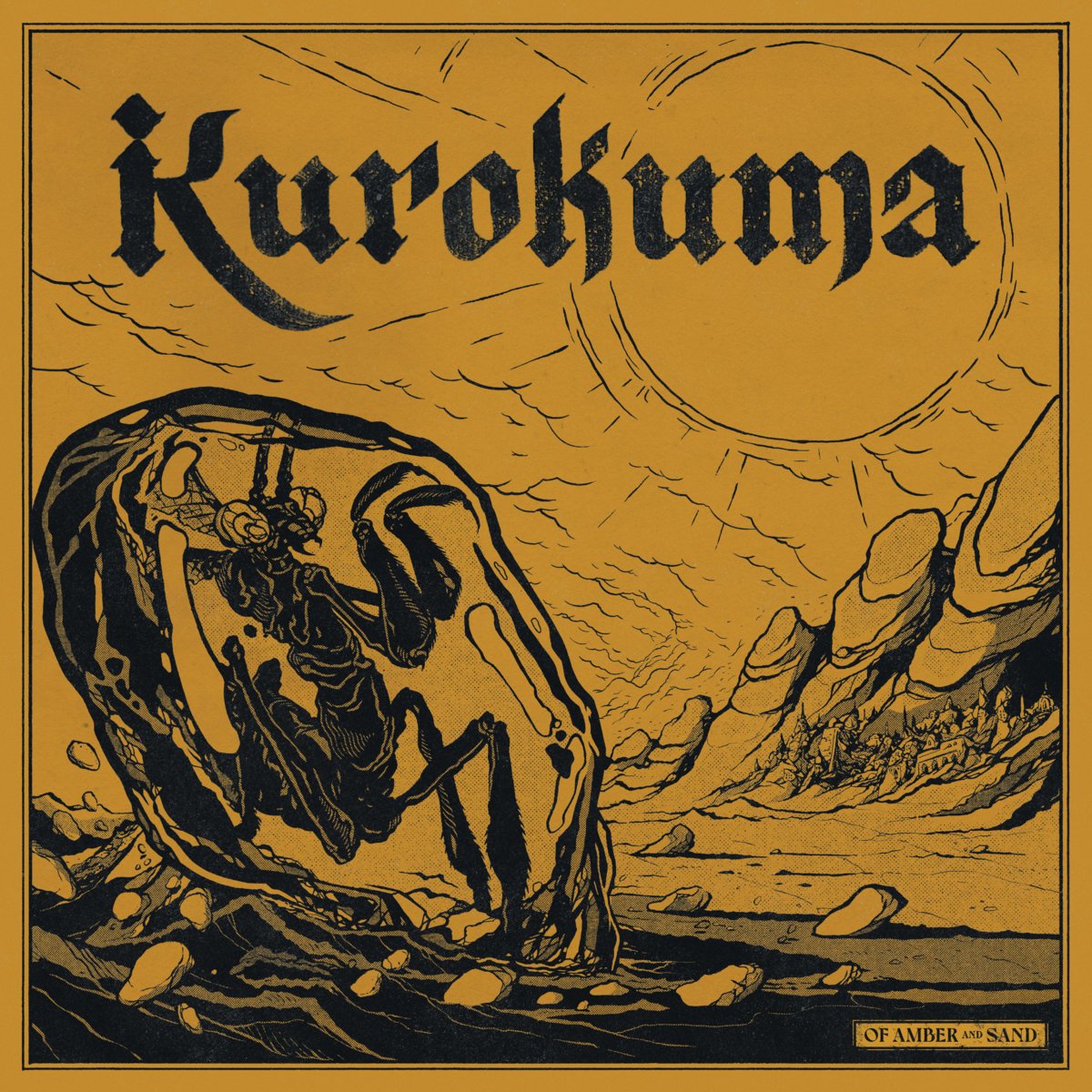
Sheffield sludge metal trio, Kurokuma, melted our faces and hardened our hearts with their 2022 debut LP. Scream Blast Repeat enjoyed Born of Obsidian but advised its readership that ‘those with old school tastes will need to invest more time in the eclectic nature of this record, but the rewards will be even richer if they persist.’ Two years have passed, and their riffs are even heavier, and their minds appear to be liberated on album number two. Are you ready for a psychedelic experience from one of metal’s most miserable genres?
Unlike Edinburgh psychedelic post-metallers, Dvne, Kurokuma have no time for the grandiose. Nor should any artist from Sheffield feel justified in a grandiloquent display of heroism. On first listen, this is a mean sludge metal outing, but a second exploration reveals a thoughtful progressive side to the music. Opener, ‘I Am Forever’, sees a simple chromatic riff bubble through the amps like ectoplasm as a second guitar meditates on the higher register of noise distortion. The aim is to compress the listener as if squashed together in a lift with the giants of the Serbian Olympic basketball team. Listen to the drummer skip through the groove beats like a boxer in the comfort of the gym. The vocals are more rabid in the way a carnivorous hunter-gatherer might sound if trapped in a prison cell on a diet of sweetcorn and peas. Kurokuma invoke the spirit of the orient in the lead guitar moments, but they summon the gypsy spirit of North Macedonia rather than the Arabian desert. You could imagine Tom G. Warrior laying down these beastly riffs on the next Triptykon record.
If ‘I Am Forever’ is the first layer of bread in the sandwich, what about the top slice that makes up the closing track, ‘Chronoclasm’? Though you’ll get more out of this album as a chronological audio journey, it’s worth analysing how this record ends before we examine the content in between the bread. As a ten-minute finale, it’s the type of paranoid acid trip that Pink Floyd’s Syd Barrett experienced too many times in the late 1960s. Only this one has sinister guitar patterns filtering through the speakers like a combat unit leaving capsules of poison gas in enemy territory with the wind behind them. Here, Zakk Wells digs into his bass with vibrating fingers that are sure to give him repetitive strain injury (RSI). As the slowest drumbeat on the LP, it’s as close to doom metal as it gets. Yet the barbarous vocals project an unusual form of agony, like the giant of a folk tale feeling sorry for himself. There’s no fun here – just pain and anguish and the prospect of self-obliteration.
So, what can we make of the songs in between the jaws of track one and track eleven? Jake Mazlum uses the Eastern scales to send out a cautious signal to lifeforms in other galaxies in ‘Death No More’. The bandsaw guitars take over at 01:10 in syncopated formation controlled by the eager muting of a picking hand. Here, Mazlum’s riffs spill over their surface containers like green gunge pouring out of rusty tanks and befouling the land around them. There’s too much aggression and sinister pleasure for this to be considered stoner metal. Fellow Sheffield bruisers, Terminal Sun, are a good comparison for the stomach-churning drop-tuned riffage on display here. Observe how Mazium shrieks with the dramatic desperation of a young Chuck Schuldiner in between the masculine shouting. This is sludge metal for death metal fans.
The question is why this album is so easy to absorb when it’s so bloody slimy and dangerous to your health (mainly your ears)? ‘Fenjaan’ thrives on moody guitar shapes concentrated on the low-end frequencies with trepidatious movements towards the finger-tapping possibilities higher up the fretboard. Then, the vocals and palm-muted rhythms explode at 02:10 as if executed by Norwegian metal heroes, 1349. Hark how the guitar melodies gravitate towards the Orient like a Bedouin to a camel. By contrast, ‘Neheh’ uses a ponderable square bass effect to fade in like the film music at the beginning of an espionage operation. This is the perfect platform for the guitar to saunter in the mid-range before slamming down on the sludgy power chords.
You’ll need to play this album in running order to appreciate the interludes and ambient mood recordings that Kurokuma craft among the earth-shaking metal efforts. This gives the record a wonderful equilibrium and expands the emotions beyond bleak destruction and into a higher cerebral plain. ‘Timekeeper’ sees synth drones and stereo samples of electronic drum percussion co-exist uneasily until a Massive Attack beat emerges in the style of ‘Teardrop’. Its successor is the complete opposite. ‘Crux Ansata’ has a message: Conan beware – you have a new threat on your right flank. This is heavier than the new Totengott album in the way the guitar chords linger like commando units sent into the aftermath of the battle to finish off the prisoners and injured survivors. You could call this death-doom with a Bongzilla angle. Zakk Wells busts out his plectrum-plucking bass grooves as if subbing for Bristol sludge heroes, Torpor.
Psychedelic sludge metal does not begin with Kurokuma, but they make a good case for owning the micro-genre in its current form. Of Amber and Sand deserves to stay in your digital library until the end of the year and beyond.
Verdict

Release Date: 09/08/2024
Record Label: Self-released
Standout tracks: Death No More, Fenjaan, Crux Ansata
Suggested Further Listening: Terminal Sun – All That Will Burn Is Already on Fire (2024), Gozer – An Endless Static (2022), Totengott – Beyond the Veil (2024)