
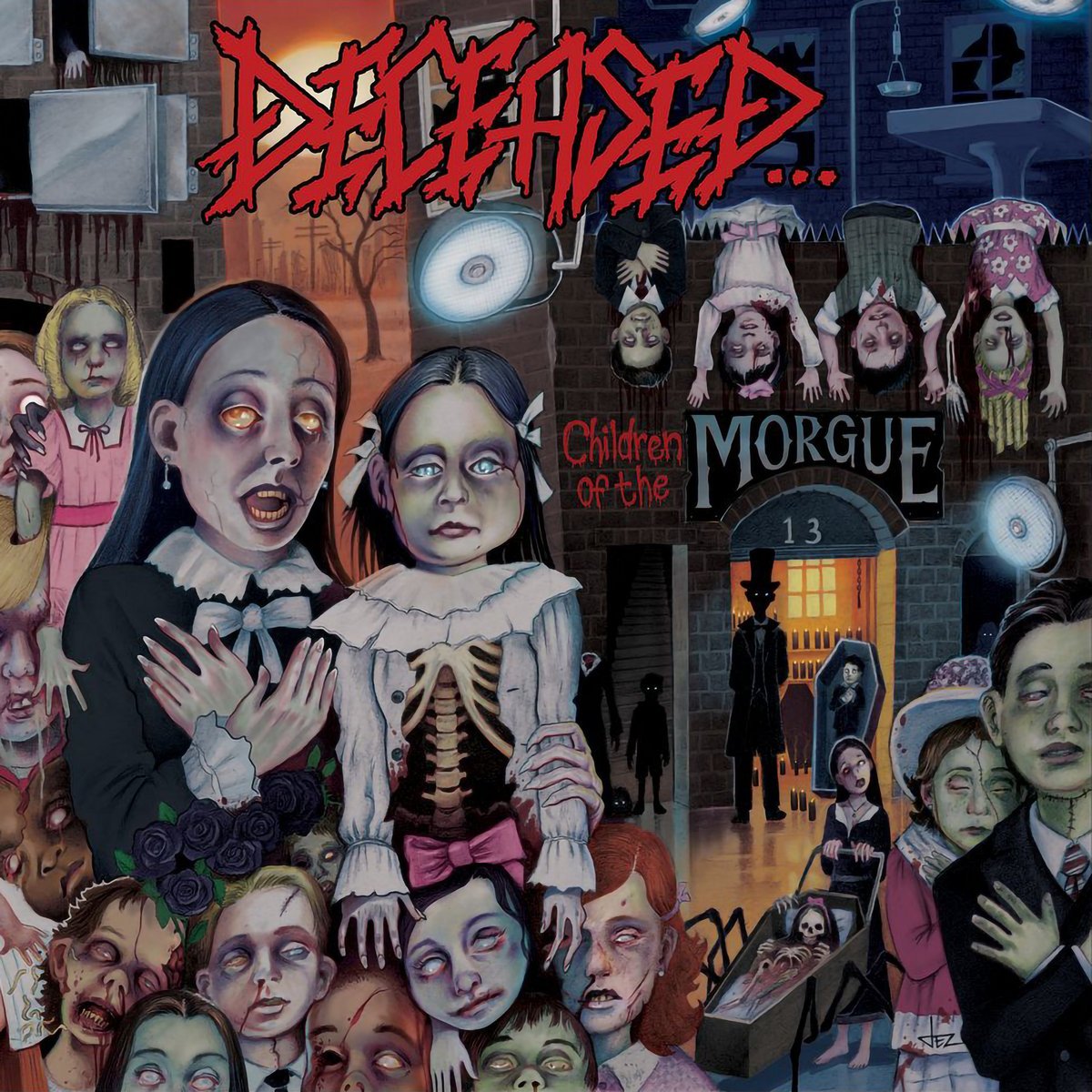
Fun fact: Deceased were the first band to sign to Relapse Records when the company formed in 1990. Now on album number eleven following a resurgence of enthusiasm in 2018, this is their fourth record in seven years. Only vocalist Kingsley “King” Fowley remains from the original lineup, but Les Snyder (bass) played on the 1991 full-length debut, and Mike Smith (guitar) appeared on the group’s 1992 EP, The 13 Frightened Souls. Their longevity alone makes them legends in some quarters, while other knowledgeable metalheads are not aware of their existence. Children of the Morgue will not change this perception.
A trepidatious doom metal beckons you in the intro track, ‘Destination: Morgue’, like the wagging finger of a witch saying, “Come here to me, child”. It’s one of four interludes on this album that are superfluous. Instead, the title-track (song number two) gives us a snapshot of the Deceased sound. High tempo drums and ringing fifth chords set the scene here for an old-school thrash attack like Possessed with a cleaner production. Deceased’s idea of death metal is the sound that existed before Death’s 1987 debut. In other words, Slayer’s speed with the menace of Celtic Frost. Yet a deeper analysis sees some unorthodox chord choices in the bridge to the chorus. How they get seven minutes out of this is impressive. The answer: turn to Iron Maiden’s martial spirit for inspiration and Testament’s muscle for endurance.
Deceased are a traditional heavy metal band at heart with gory vocals. They don’t do blast beats, or drop-tuned guitars, or jazz-fusion intervals. They put storytelling at the heart of what they do in the likes of ‘Terrornaut’ and ‘The Reaper Is Nesting’ rather than emphasise claustrophobia or brutality through their instrumentation. It also means they approach songwriting through the lens of melody. The former resembles early Entombed in the bare-chested pose of Manowar. Their love of the early Megadeth records is evident in the latter once you strip out the proto-death metal vocals. A modern death-thrash band would alter the tunings, raise the treble of the guitars, and turn the drums into a machine. Not these guys. By showing their age, Deceased earn the respect of their peers on integrity alone.
The obvious flaw of this record is its intimidating length of fifty-five minutes. It feels like the grim reaper has you in his sights when the band fade in the guitars for ‘The Grave Digger’. The dance macabre is enough to give you the shivers. Part two begins after a rare contralto vocal piece by a guest female. This is where they hope to justify eight minutes and forty seconds of action, but it’s a step too far. Deceased rely on their drummer to drag them over the line here by revisiting the intro. By contrast, they can almost claim ‘Fed to Mother Earth’ as a success despite it creeping past the seven-minute mark. This is a rare venture into Voivod territory with a nod to late 1980s’ Celtic Frost, and they introduce the same female support vocals from ‘The Grave Digger’. But creating a superfluous part two with a film sample as the transition is unnecessary.
Deceased seem torn between their roots and the need to incorporate new styles. ‘Brooding Lament’ shows a clear love for the NWOBHM bands that influenced them when they were known as Mad Butcher in 1984, while ‘Eerie Wavelengths’ flirts with black metal arpeggio riffs. Overall, they strike a reasonable balance. You can tell they enjoy what they do with a new-found purpose, but this music will struggle to make itself heard over the heads of superior bands in their niche.
Children of the Morgue is too long and too demanding on the listener’s stamina levels, but there’s enough to make you plug in your earphones and blast it at least twice.
Verdict

Release Date: 30/08/2024
Record Label: Hells Headbangers Records
Standout track: Children of the Morgue, The Reaper Is Nesting, Fed to Mother Earth
Suggested Further Listening: Devastator – Baptised in Blasphemy (2020), Witchery – Nightside (2022), Sadus – The Shadow Inside (2023)