
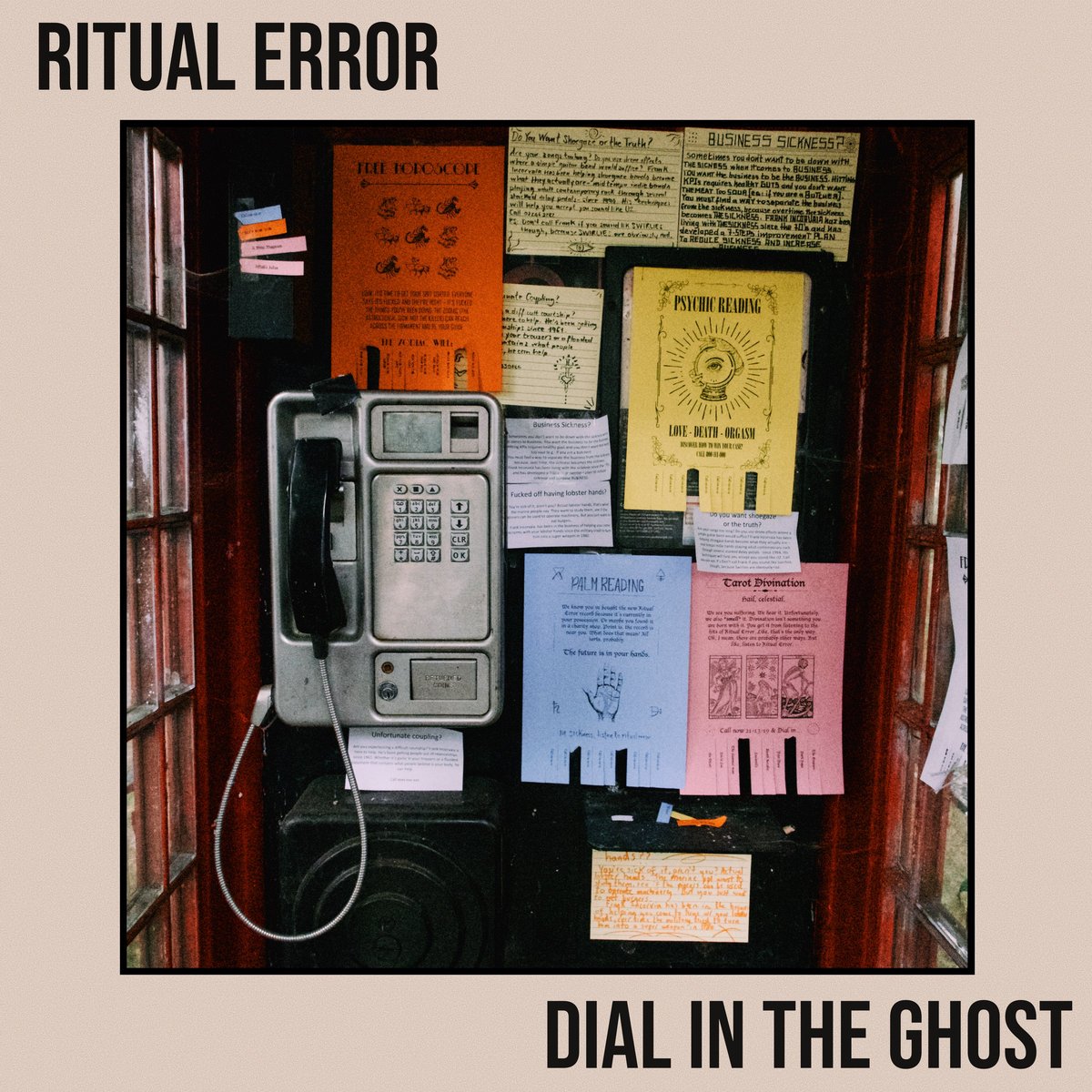
Post-hardcore is the music equivalent of buying a new piece of software and refusing to read the instruction manual for it. Searching for the software’s capabilities without knowing its operating recommendations is fun if you believe that an orthodox understanding of it’ll only reveal its limitations. Ritual Error are from this school of thought. The debut album from this London-based trio is all about ripping up the rule book and letting the emotions rule the head.
A vicious guitar overdrive sucks you in from the first blistering chord of ‘Good Conscience in Three Stages’ as the feedback gathers behind it. Okala Elesia shouts into the microphone as if auditioning for a Rise Records contract. Listen to the bass throbbing underneath the biting mid-range guitars. Elesia chooses the intervals that are most alarming to the human nerve system instead of the thick power chords that most six-stringers would employ with the tools at their disposal.
Fugazi are a big influence here. You can even hear The Dead Kennedys and early Killing Joke in the guitar phrasing of Dial in the Ghost. Ritual Error are proud to identify with post-hardcore. Fans of Snapcase will snap your hands off if you show them songs like ‘The Living Archive’ and ‘Life as a Contact Sport’. The tuneful shouting is an acquired taste in both, yet the desire to create infectious energy is a success in the latter. More importantly, it’s energy that riles you and makes you sit up and take a closer look at the injustice you see all around you. Before djent came along, post-hardcore was the guitar genre with the highest number of postgraduate musicians and listeners. Ironically, that’s because its purveyors do their best to ignore orthodox music theory and prize spontaneous emotion above everything else.
For much of this LP, vocalist and guitarist, Okala Elesia, sounds like a man holding back an overflowing reservoir, but it’s Alessandro Incorvaia’s bass holding ‘Haldeman’ together. You can tell it’s a post-hardcore album when you’re at track four, and there’s no sign of a distorted power chord. ‘Twin’ captures the vibe of the early At the Drive In records. “How must it feel to see every day in binary?”, roars the band’s frontman. How does he find melody in his frantic playing? Here, the single string notes shine with the chords like steel and bright lights. This is what emo envisioned as the future of punk in the mid-1990s before the teenagers got hold of it and turned it into a pop phenomenon. Believe it or not, it once appealed to adults, and Ritual Error do a good job of reminding us of this. The interaction between bass and guitar is like operating surgeon and physician assistant in ‘Artist at Work’.
The most underrated aspect of this music is how it captures a sense of sorrow in a genre (punk) famous for being abrasive, impulsive and disdainful of sophisticated musicianship. Ritual Error create a sense of urgency and nervous excitement as if preparing to man the barricades against the riot police. They sound out of control, but they grasp the controls like heroes in ‘Tear Jerker’ and ‘Return to Lagos’.
Dial in the Ghost can sometimes sound sentimental despite its sharp dynamics. It’s because Ritual Error combine high-range chords with a lively punk tempo and scream their lungs to a standstill. They also prize irony in their lyrics, which means the NME will like them as much as the Kerrang! readership.
JVB
Verdict

Release Date: 08/11/2024
Record Label: TNS Records
Standout tracks: Good Conscience in Three Stages, Haldeman, Tear Jerker
Suggested Further Listening: Killing Joke – Fire Dances (1983), Fugazi – In on the Kill Taker (1993), Demersal – Demersal (2024)