
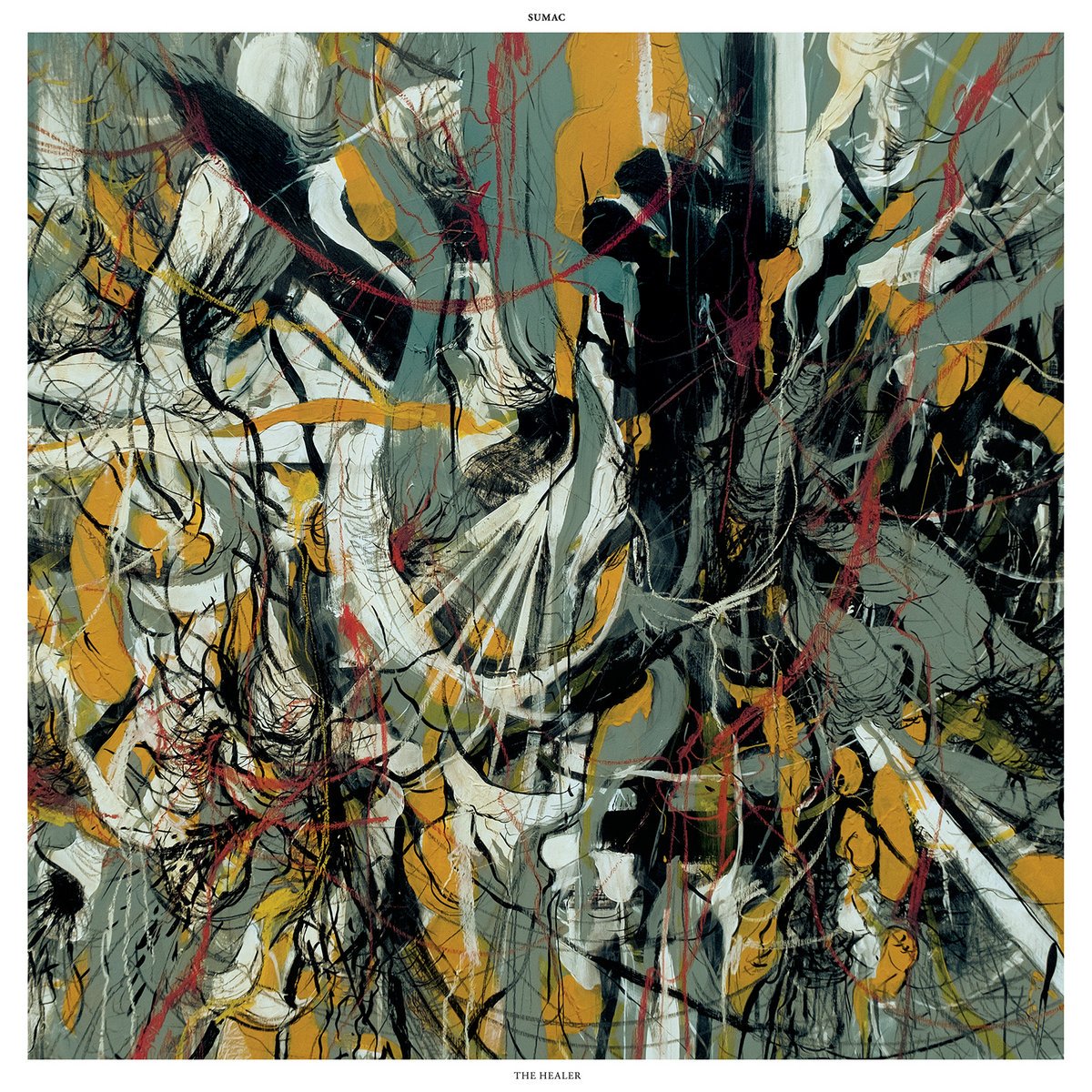
Noise metal supremo, Aaron Turner, is famous enough in the underground to need no introduction and unknown enough in the mainstream to justify one. The founder of Hydra Head Records (Converge, Kayo Dot, Knut, Torche) and post-metal gods, ISIS, he releases his art these days through his supergroup, Sumac. The lineup of Turner (vocals, guitars), drummer, Nick Yacyshyn (Baptists, Genghis Tron), and Russian Circles bassist, Brian Cook, remains intact from the band’s 2015 debut as they approach album number five. Those enthralled by 2018’s one hour and six minutes of Love in Shadow will have another chance to indulge their love of longform “free metal” with the trio’s latest release. But this time they ask you to stomach one hour and sixteen minutes. How dare you roll your eyes?
These days, modern post-metal seldom dabbles in the avant-garde. That’s not the case here. This is experimental metal with an emphasis on improvisation and no concern for traditional song structures. Opener, ‘World of Light’, breaches the twenty-five-minute threshold and begins with a distorted bass that hums like a decrepit motor bike failing to start up its engine as a faint layer of amp feedback resonates in the background. Here, Yacyshyn uses the first three minutes to improvise the world’s longest (and unintentional) solo. It’s the type of intro you hear in a drone metal song where the idea is to build the tension slowly. The guitar takes over in a monotone of amp bleed, unsure if it should hit a chord or stay switched on like a faulty refrigerator. This conundrum lasts for a further three minutes until Aaron Turner enters with a dry-throated rasp. You can make sense of the structuring on the second listen. In summary, they repeat the first two parts on a cycle, yet they create the illusion that the musical approach is abstract and improvised. A new song emerges at 11:30 under the weight of fierce guitar downstrokes that imitate the range of a bass guitar. Even this takes sixty seconds to evolve into a simple doom metal riff with regular drums.
Sumac are in no rush here, but that might be more of a problem than a gift to the listener. You could imagine Godflesh writing something like this opening track if somebody dared to record an extreme metal version of Lou Reed’s Metal Machine Music. Or how about the prospect of an elongated soundcheck by Conan? Turner pushes his voice to the cracking point and allows his words to pop out of tune in a gruff death metal voice as if the message is one of defiance. Do we need a further four minutes of post-rock minimalism from here once the instruments reset? Mogwai fans might like it, but it’s ambitious to think that the rest of us will. Yet the ambient effects and field recordings in the background will keep you occupied underneath the aimless guitar meanderings if you need somewhere to direct your attention. It’s a relief when the caveman doom riff reappears at 20:00. The finale is even better, indulging in a frantic maze of guitar riffing and technical drum rotations like a giant awaking from sleep with a rumbling belly – where did this Napalm Death assault come from?
‘Yellow Dawn’ is more soothing. A simple tom drum pattern plays at the lowest velocity setting as a pedal loop feels its way into the mix with an organ as its guide. This album has much to discover on repeat listens, but the question is whether you can devote one hour and sixteen minutes to this quest. Might it be easier to appreciate as background music? The riff that emerges at 02:40 is rougher than an expedition in the Faore Islands in winter – you can’t tell which frequency is the bass and which one is the guitar. But would we be disappointed if Melvins or Fantômas released something like this? Probably not. You can vibe with the extreme dynamic changes because they come gradually. This music is far more rehearsed than you can believe. The numerous drum and guitar changes from 05:00 and 07:00 show no reliance on repetition to blast through the speakers. If anyone wants a definition of noise metal, here it is. But you could say the same thing if somebody asked you to cite an example of avant-garde metal.
It might be fruitful to check out Polish trio, Atrocious Filth, is you want a more succinct record with shorter songs. That way you can eliminate the major-key guitar noodling that serves as a transition between the rhythmic spasms that give shape to this music. Why does the post-rock idea of guitar often sound like somebody tuning their instrument backstage with zero motivation? This could pass for improvisation in the studio, and it’s quite impressive if that’s the case even if the musicianship levels are basic. Each guitar chord in ‘New Rites’ feels like a punch in the mouth with the full weight of staccato drums behind it. Add chaotic saxophone solos in here, and you have a Mr Bungle or Naked City song until it picks up after four minutes as a sustained piece of angular sludge metal with abundant fills and threats to change the tempo. It would be even more enjoyable live when Yacyshyn takes over with pounding d-beat rhythms and double-kick accents at the half-way mark before the noise abates at 10:15 like the last belch of a military vehicle as it grinds to a permanent halt. At this point, ‘New Rites’ ends like it begins.
Of course, there are some dispiriting questions that surface when listening to The Healer. Closing track, ‘The Stone’s Turn’, is another song that smashes through twenty-four minutes of action. Here, Turner howls like a wolf with its leg trapped in a snare. Is that the bass or the guitar shredding through the lower end of the scales in fast alt-picking motion at 02:30? Listen how the drums follow these fuzzy patterns with no hesitation. This album has a lot more high-tempo moments than you’d expect. Picture a grindcore band like Fuck the Facts playing 1970s prog rock. You’d expect the walls to crumble if watching it unfold live. Can you imagine if Iron Monkey wrote a psychedelic album? It might sound like The Healer if they did. This time a transition brews at the fourteen-minute mark like a boiler in need of a reset to start working again. Hand-muting the electric guitar strings is an ugly way to do this, but the rewards are worth it after twenty minutes when they summon a head-nodding sludge riff with a noxious coating of distorted bass.
The ultimate triumph of this album is that less than twenty percent of it is irksome, which is quite an achievement for something so long and challenging. You can feel your chin trembling at the thought of pressing play for a second time, but you’ll soon realise that it can also be a productive endeavour.
Verdict

Release Date: 21/06/2024
Record Label: Thrill Jockey Records
Standout tracks: Yellow Dawn, The Stone’s Turn
Suggested Further Listening: Sonic Youth – SYR4: Goodbye 20th Century (1999), Atrocious Filth – Ovv (2023), Kollapse – AR (2024)