
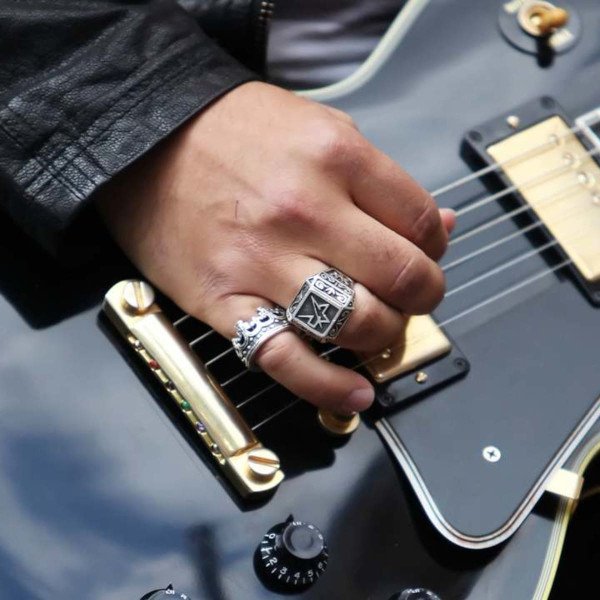
The editors at Scream Blast Repeat all grew up in the era of Korn’s disastrous influence on metal with their ubiquitous album Follow The Leader (1998) signalling the death knell of the guitar solo and the end of virtuoso musicianship as we knew it. As kids in the 1990s, we had Dimebag Darrell as our only metal god and Billy Corgan as the equivalent maestro in the world of rock. Almost everybody else stopped playing solos or anything outside of detuned one-finger chord progressions. Death metal was the exception.
The noughties saw a return to technical guitar work thanks to the likes of Ben Weinman (Dillinger Escape Plan) and Paul Waggonor (Between the Buried and Me) and the emergence of Meshuggah as a defining influence on the musicians that perfected their instruments prior to 2010. This generation has now gone full circle and brought back a level of technical brilliance last seen in the 1980s.
So, let’s have a look at the contemporary guitar heroes who’ve left their implant over the last decade and risen to the forefront of their generation as great players. Some are already innovators; others are emerging candidates. Everybody on this list can shred, but we also acknowledge song-writing ability, rhythm and originality when compiling our top seven. Enjoy!
7. John Browne (Fellsilent, Monuments)
The Milton Keynes man came onto our radar in 2008 with his first band, Fellsilent. But his guitar work with Monuments and a spell as a touring guitarist with Periphery have set him up as the best rhythm player of his generation. Probably also the funkiest on this list, a John Browne riff is recognisable for its Meshuggah polyrhythms and manic scale runs that incorporate all kinds of dissonant chords. Most look impossible to fret when you watch his playthrough videos on You Tube. Also founder of online guitar school, riffhard, where you can book tutorials and learn his secrets of executing the best metal hooks. Honourable mentions also go to Paul Ortiz (Chimp Spanner) and Lee McKinney (Born of Osiris) in this category.
Recommended work: The groovy metal riffs and fretboard funk on Monuments’ last album, Phronesis (2018), are the height of progressive-djent craftsmanship. Current Monuments single, ‘Animus’, is also a good place to start.
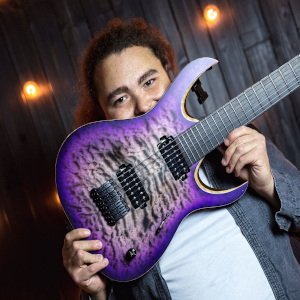
6. Kev Pearson (No Sin Evades His Gaze, Slugdge)
Progressive death metal has produced some of the most innovative guitarists of the last decade in Brody Uttley (Rivers of Nihil) and Scott Carstairs (Fallujhah), but the ultimate riff master is Scottish seven-stringer, Kev Pearson. Slugdge’s 2018 classic, Esoteric Malacology, is packed with mammoth guitar passages that bite as hard as snakes and crunch with as much gratification as a snail shell underneath your foot. His fretwork on ‘Cropkiller’ might be the most mellifluous riff this century. The flying Scotsman now lives in the northwest of England and spends most of his time hiding from the outside world, like bandmate, Matt Moss. What we can expect from the next Slugdge record is anyone’s guess, but it should be another colossal exercise in metal axemanship.
Recommend work: The progressive death metal on Slugdge’s Esoteric Malacology (2018) is a guitar masterpiece and fine addition to Encyclopaedia Metallicus Rifficus.
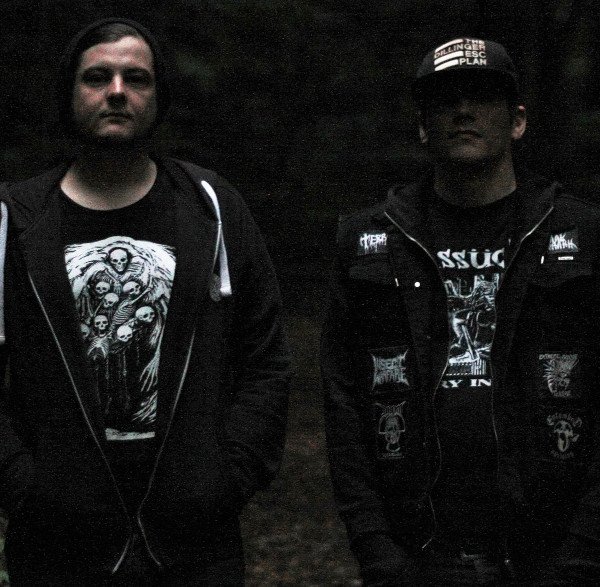
5. Roman Ibramkhalilov (Jinjer)
Ukrainian sensations Jinjer have stormed the Metal Scene in the last two years with an arrival that makes Clive of India’s conquests look subtle in comparison. Tatiana Shmailyuk gets most of the praise for her breath-taking vocal range, but Roman Ibramkhalilov is a gold-standard riffmeister. Originally part of a two-man song-writing team with fellow guitarist Dmitriy Oksen, he never looked back after the latter departed in 2015. A decision to lower the tuning to Drop A on the band’s 2016 banger ‘Sit Stay Roll Over’ was the best thing he ever did. Fans of low-end riffs with a blend of arpeggiated explorations further down the fretboard where jumping for joy when they heard ‘Pit of Consciousness’ from the latest Jinjer album. Honourable mentions also go to Reba Meyers of Code Orange and Evgeniy Rassadkin of Russian sensations, Neorhythm, who may provide competition in the future.
Recommended work: Jinjer’s latest album, Macro (2019), is a classic of the Drop A tuning with elements of djent, death metal and jazz fusion furnishing the listener with a rich template of sounds.
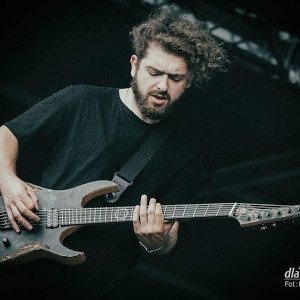
4. Marc Okubo (Veil of Maya)
Few guitarists have been as influential as Okubo over the last decade following Veil of Maya’s 2008 classic, The Common Man’s Collapse. A fan of dubstep and free-form Jazz, Okubo injects a unique flavour into his detuned riffs with meanderings into the higher reaches of the guitar neck. He’s also an accomplished songwriter and composer who keeps his shredding within the confines of his rhythms rather than as an afterthought at the end of a song. Joe Tal (Textures) and Acle Kahney (TesseracT) merited consideration for this spot, but Okubo takes the prize as the more influential player. The new Reflections album is testament to his inspiration on other bands.
Recommended work: Veil of Maya’s 2017 opus, False Idol, demonstrates Okubo’s song-writing talent and ear for a melody underneath the avalanche of detuned polyrhythms. Check out the song ‘Pool Spray’.
3. Jason Richardson (Born of Osiris, Chelsea Grin, All Shall Perish, All That Remains)
We had to include a bona fide shredder on this list and Jason Richardson beats Wes Hauch (The Faceless, Devin Townsend), Dean Lamb (Archspire) and Danny Marino (The Agonist) to the spot by a whisker. Here is the guitarist who accepted the challenge of Yngwie Malmsteen, Jason Becker and Steve Vai and sprinkled his wizardry all over the brutal syncopation of deathcore and djent with a new invigoration. Watching the gurn on his face as he sweep-picks the entire fretboard in ten seconds is as interesting as the scales he uses to produce his magic. Also launched a successful solo project and worked with instrumental wonderkids, Polyphia. The harmonies he produces on his duet with American violinist, Lindsey Stirling, are out of this world.
Recommended work: Richardson’s 2016 solo album, I, takes guitar virtuosity to a new level.
2. Richard Henshall (Haken)
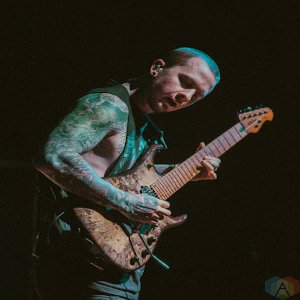
London’s Richard Henshall has it all – the good looks, the intelligence and a grade eight certificate in classical piano. But his work as co-guitarist in Haken is the closest anyone comes to the technical brilliance of Dream Theater’s John Petrucci. Anybody who is confident enough to invite the drums to follow them as they sweep the fretboard in anticipation of an imminent tempo change is approaching music from a level of daring more dangerous than tight-rope walking. Yet Henshall and fellow guitarist, Charlie Griffiths, can do this in their sleep. His seven-string riffs rarely follow a conventional 4/4 time signature but are never chauvinistic in the context of Haken’s music. Also released his debut solo album, The Cocoon, last year to warm praise, not least for its ambition to merge metal, electronic and jazz into a cohesive sound.
Recommended work: Look no further than Haken’s 2018 prog-metal classic, Vector. For a standalone song, enjoy ‘The Architect’ from Haken’s 2016 album, Affinity.
1. Misha Mansoor (Periphery)

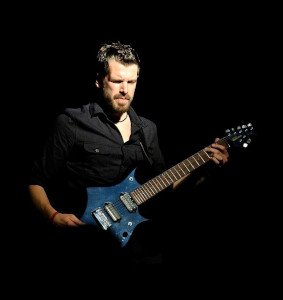
The most influential metal guitarist of the last decade, Misha ‘Bulb’ Mansoor has revolutionised the genre with his onomatopoeia playing style known as Djent. You should already be aware of his story: Misha was the original You Tube guitarist who stalked the Meshuggah and John Petrucci internet forums in 2005 and built up a mass following of subscribers with his love of gear reviews and seven-string riffing. He was already inspiring a new generation of guitarists before the debut Periphery album arrived in 2010, but his imprint has ripped through most genres of metal from metalcore to progressive death metal and has even left its mark on rock and fusion music with the likes of Chon and Polyphia adapting his playing style in non-metal paradigms. As a songwriter, Mansoor has matured to the standard of a master composer over the six Periphery albums to date but has never forgotten how to thrash out a spellbinding riff that leaves your jaw dropping to the floor. Anyone who has seen him play piano and drums will marvel at his multi-instrumental ability and phenomenal creative output. His co-guitarists in Periphery, Jake Bowen and Mark Holcomb, could easily find a spot in this top seven list, but Misha is the emerging candidate to take a place next to Devin Townsend as the metal genius of our age. His close friend, Tosin Abasi (Animals as Leaders), also deserves a mention for his innovative fusion style that has inspired a generation of metal guitarists.
Recommend work: Er, just about everything he’s done, but the song ‘Zyglrox’ from the self-titled Periphery album (2010) is one of the heaviest and most complex whirlwinds of shreddery in the history of metal. Start with Periphery II: This Time Its Personal for a full-length introduction to his work. Go for Periphery IV: Hail Stan for his symphonic arrangements and an example of his jazz fusion soloing on lead single, ‘Blood Eagle’.