


“From a production point of view, this record stands the test of time on all counts. The guitars are pulverising, the drop-tuned bass lines steel-plated, the snares as bruising as an industrial drum machine.”
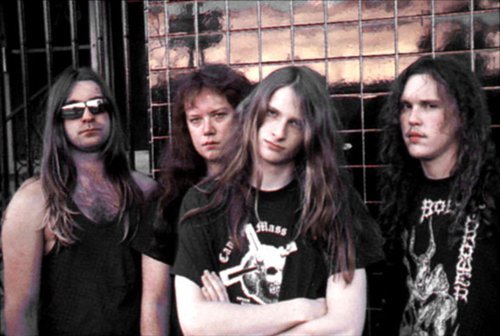
Cancer were unique among the English death metal bands that exploded out of the underground in the late 1980s. They never fit in with the extreme metal artists centred around Earache Records, where Napalm Death, Carcass and Bolt Thrower emerged as genuine influencers on a burgeoning movement evolving out of thrash metal and crust punk. Instead, the Telford trio looked towards the Floridian scene and recorded their 1990 debut album with the legendary Scott Burns on the mixing desk. Obituary guitarist, James Murphy, joined their ranks for 1991’s seminal Death Will Rise and by 1993 they were an established name on the global death metal circuit next to Morbid Angel and Deicide. You could be forgiven for thinking them an American death metal act.
As one of the first death metal bands to say yes to a major label offer, all eyes were on Cancer by the time East West (then part of Elektra records in the Atlantic Records group) released their 1995 follow up to 1993’s well-rated The Sins of Mankind. Just how East West were expecting a death metal band to produce a gold record looks like an epic case of myopia thirty years later. Morbid Angel and Carcass had frustrating stints on major labels and Sepultura’s experience on Epic Records led to them abandoning their US distribution deal and reverting back to Roadrunner. In hindsight, the suits got it wrong with death metal – the music was too hostile and un-playable on radio. The fanbase made it clear they would not countenance the same mainstream manicure the record executives imposed on thrash metal at the turn of the 1990s.
Nonetheless, Cancer surprised everyone when Black Faith hit the shelves. Here was a band who thought it possible to re-invent themselves as an industrial metal act without sacrificing their heavy approach. Accusations of sell-out were as loud as the protestations against major label manipulation. Looking back a decade later, Terrorizer called it a poor man’s Heartwork while some made comparisons with Metallica’s re-invention away from their thrash roots towards a mid-tempo hard rock sound. Within a year, the group disbanded due to disillusionment with their major label experience. An optimistic vision ended in commercial and critical failure, but was Black Faith an aberration or a misunderstood record that deserves a re-appraisal?
Before we attempt a rehabilitation, let’s be clear. Cancer abandoned the Chuck Schuldiner-inspired death metal of their first three records on Black Faith. John Walker’s vocal abrasions no longer sounded like John Tardy, the grimy guitar distortion of Death Will Rise disappeared, and they stayed away from the complex song structures from their 1993 album. In came Helmet, Killing Joke and Ministry and out went the Scott Burns sound. No wonder people reacted with dismay.
Yet the most surprising thing about Black Faith is the heavy guitar tone. Helmet’s multi-platinum success on Interscope Records gave other major labels a precedent for marketing heavy music to the mainstream. Cancer were at a crossroads in their career and needed to re-invent themselves. Sepultura, Pantera and Obituary had already incorporated Page Hamilton’s post-hardcore take on metal into their sound, and with Machine Head emerging as the saviours of metal with a slower and more grove-orientated dynamic, the zeitgeist demanded a chunkier audio assault. With this in mind, opener, ‘Ants (Nemesis Ride)’, is a magnificent slab of industrial groove metal in the mould of Prong with vicious drop-D riffing and a muscular Jaz Coleman vocal that John Walker never hinted at in any of the previous records. The beats are calibrated with the precision of a Ministry stomp and the middle eight reminiscent of Death’s ‘Lack of Comprehension’ in the way it changes tempo to a wonderful breakdown of palm-muted scale runs. The suits did not stain this song with demands for a radio friendly single. This is fucking heavy!
‘Who Do You Think You Are’ and ‘Face to Face’ are just as relentless in their militant rhythms, the former boasting an impressive double-kick groove in the chorus and the latter incorporating a 70s rock-inspired riff with Fudge Tunnel aggression. Is there such thing as an honourable sell-out? If so, this is a band showing their reluctance to go in a more alternative metal direction by keeping it as heavy as possible.
Fans of the band’s earlier work will perk up at the one and only time Walker employs his synonymous death metal vocal on the chorus to ‘Without Cause’. This is another bruiser in the mid-tempo range of Pantera, full of crunchy riffs and a guitar distortion inspired by Terry Date’s production on Prong’s seminal Cleansing album from 1994. If the album ended here as a four-track EP, we’d be talking about one of the best transition records in the history of 90s metal.
Unfortunately, the suits get their claws in on ‘White Desire’ and ‘Kill Date’. This is the most radical departure from the band’s death metal roots with an emphasis on the cyber-punk beats of Ministry bringing a Lollapalooza mindset to the mood of the album. The latter is a poor attempt to score a hit like ‘Jesus Built my Hotrod,’ and the title track that follows (after an interlude called ‘Temple Song’) promises a more prog metal approach but ends just as the band are gearing up to deliver a climax.
Black Faith warrants criticism for the way the band structured their album rather than the way it sounds. The mid-section lacks direction and loses momentum, but the last quarter is a triumphant return to the bass-heavy aggression of the opening sequence, with ‘Highest Orders’ and closing track, ‘Save Me from Myself’, ramping things up once more. It’s not death metal, but it’s still heavy.
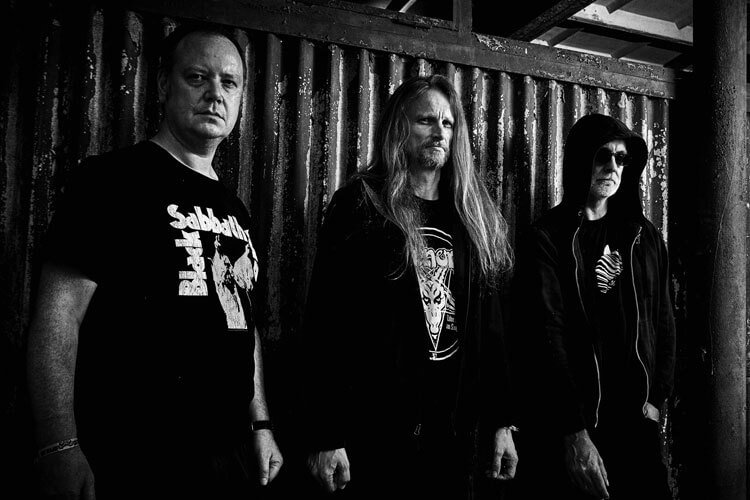
From a production point of view, this record stands the test of time on all counts. The guitars are pulverising, the drop-tuned bass lines steel-plated, the snares as bruising as an industrial drum machine. Though needing a bit more focus in the middle section, this is a good album if you can get past the band’s emancipation from death metal and place Black Faith in the context of Prong and Helmet. Let’s not forget, alternative metal in this period was as innovative as anything in heavy music thanks to Faith No More, White Zombie and Rollins Band. It takes courage for a death metal band to swap gore for groove, and any that cross the divide will always meet criticism from the puritans.
How much we can blame on the executives and A&R muppets at East West for the band’s radical change in sound is debatable, but, twenty-five years on, Black Faith is not quite the aberration that marked it for the dustbin of heavy metal history.
JVB
Verdict in Defence

Year of release: 1995
Standout tracks: Ants (Nemesis Ride), Who Do You Think You Are, Without Cause
Suggested Further Listening: Helmet – Meantime (1992), Prong – Cleansing (1994), Fudge Tunnel – The Complicated Futility of Ignorance (1994)