
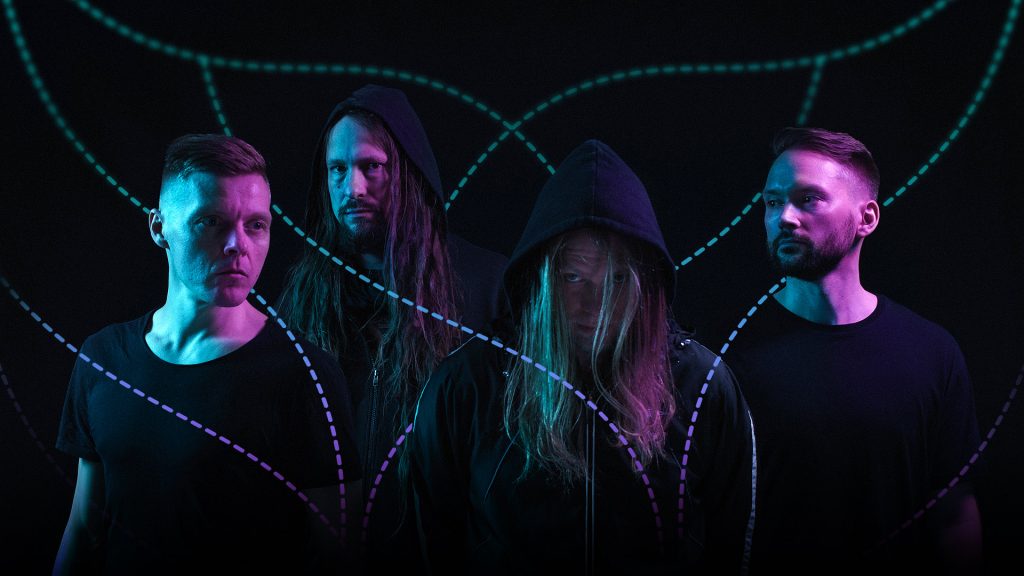
Helsinki metal disrupters, Khroma, completed their third album months ago but are waiting for the right time to unleash it on the metal world. Anybody who saw them supporting Jinjer on their Macro Tour last year will know we’re in for something challenging. This is a band that revels in blurring the lines between musical styles with the same relish as Devin Townsend and Leprous. Taking the dystopian brutality of Meshuggah and infusing it with The Prodigy is a novel approach and one that should raise a few eyebrows of approval from those looking for something new in an era of proliferating micro-genres.
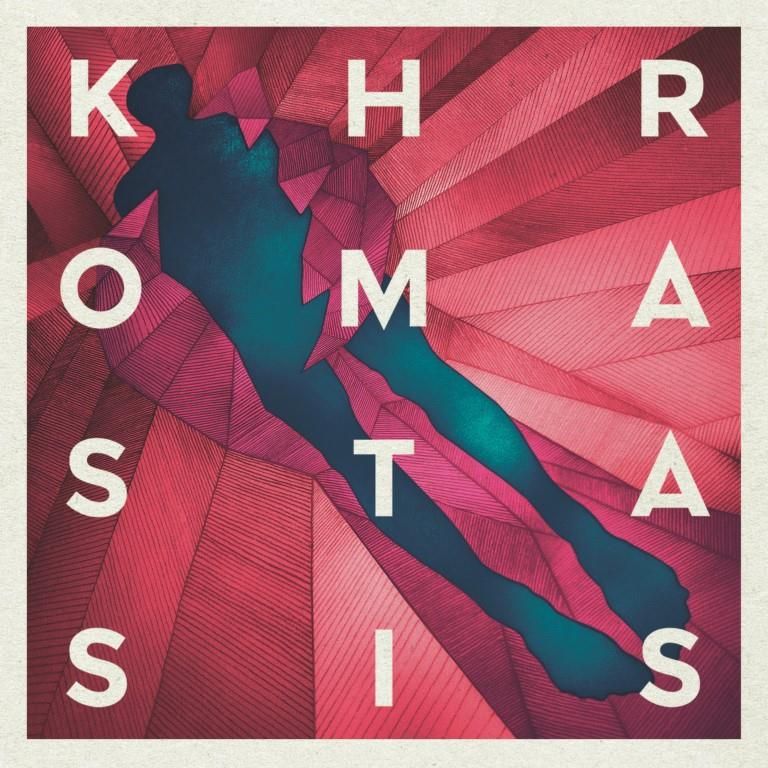
The band grabbed the attention of the underground in 2014 with their debut album, Collapse, and cemented their reputation as an emergent force with 2016’s bruising sophomore effort, Stasis. Embracing everything from trip-hop to electro and the most vicious drop-tuned guitars imaginable, Khroma will never be happy with a comfort zone for their art. It’s all about moving forward and adapting to the technological disruption that is the source of our modern anxieties. In their view, this will bring socio-economic decline rather than liberation from the machines that increase our total wealth with every marginal productivity of labour. Of course, these issues are nothing new when you consider the impact these maudlin concerns have on bands as diverse as Voivod, Fear Factory and Code Orange. Khroma make no determinist claims about the future but one listen to their audio assault is enough to persuade you we cannot take it for granted. Covid-19 makes this even more poignant.
We spoke with guitarist, Mikko Merilinna, for a rundown on the band’s immediate plans for the new album and discussed a wider range of topics.
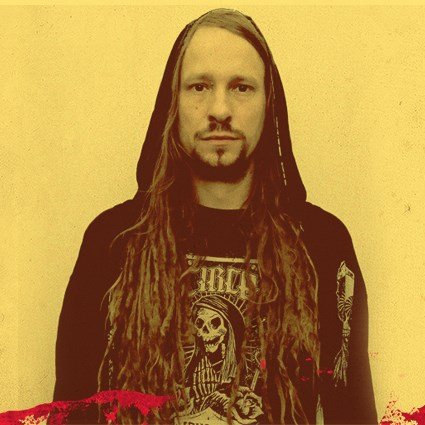
When do you expect to release your latest album and how has the Covid-19 crisis disrupted your release plans? Is there a working title for the new album?
Yeah, the release date has not been set yet, and I think this is because of the ongoing crisis. We are currently searching for a label to release the third album. There’s no title yet, two song titles are however being released – ‘Kill The Friction’, the single which we released in November 2019, and ‘Slaves for the Virus’, which we played live on our European Tour in 2019 and from which we are soon going to release a live music video, shot on that tour. The name of that song is prophetic as the song and the title were already written in 2018-2019.
You released your last record, Stasis, in 2016. Why has it taken four years to arrive at this point where you are ready to release a new album?
Well, we toured quite a lot after Stasis. In 2016 we did two long tours, in 2017 a tour as well. Then in 2018 came all sorts of delays in shapes of technical issues. We aimed for a release for 2019, but then came the chance to support Jinjer on their Macro European Tour and we didn’t quite manage to finish the album before we had to start rehearsing and getting ready for the tour. So many small things led to the long delay between the two albums, but now the third album is done and waiting to be let out!
Your 2019 single, ‘Kill the Friction’, represented something of a departure from your trademark hostile sound. In what ways can we expect your latest album to be different from Stasis?
I think we just enhanced the cinematic elements we always have had and managed to write a somewhat melodic chorus. Other than that, I think it doesn’t differ that much from our previous material, song-writing-wise. Maybe the production has more clarity and accessibility; it sounds maybe crisper and sonically fresher than before. But hard to say… If there’s development, it is a natural one and something we ended up doing by just writing the best songs possible and producing and recording them as good as we could.
What are the common themes/ concepts on your new record?
It’s about the apocalypse! All songs have themes concerning the end of all things! From different narratives and perspectives, but still the end is always near.
Which artists and albums have influenced the writing process for your latest work?
Khroma has a wide array of influences, from drum ‘n’ bass to electro, from movie music to pop, from nu metal to death metal and modern tech/djent stuff. If I list some artists: Deftones, Public Enemy, Rage Against The Machine, Noisia, John Carpenter, Meshuggah, Prodigy, Killswitch Engage, Broken Note, Ennio Morricone… We just filter our own influences and try to come up with our own mix with the best possible song-writing.
Khroma videos have a distinctive dystopian aesthetic, almost like the stage set for a modern interpretation of George Orwell’s 1984. Is there a common theme running through your videos? If so, what is it?
I think they are about the synthesis of the human and the machines, about visually distortive landscapes to which the modern person is always exposed, about Michel Foucault’s panopticon, where you are constantly under (imaginary) one-way surveillance and thus behave in a certain manner, about artificial intelligence gone awry…
You hit the road with Jinjer and The Agonist in late 2019 on their European tour. What were the three main things you learned about your band on this tour?
We had toured a lot already in the years before this tour, of course, this still being the longest tour in our career so far and by far the biggest, audience-wise. So, from this tour I think the three lessons learned were: 1) Even if you think you have gone through your equipment beforehand, something is broken/will break anyway. 2) Wash up whenever you have the chance. 3) Parking is always a problem.
Already before this tour we had learned to sleep as much as possible and always when possible; to lay off the sauce because you can’t perform when destroyed by partying too much; and to rehearse our arses off beforehand, since on a tour you don’t have time to fix underlying performance-related issues.

Khroma have always experimented with electronics. Which electronic/ industrial/ glitch artists influenced this aspect of your sound on the latest record?
We try to stay fresh and at the same time always go back to the roots when it comes to electronic elements. The contemporary drum ‘n’ bass is always interesting (Noisia, Broken Note, Black Sun Empire, I Am Legion), as are the older pioneers (Prodigy, Chemical Brothers, etc.).
Some of the guitar riffs on Stasis borrowed heavily from Meshuggah. What do you say to doubters who dismiss Khroma as another Meshuggah imitator?
I think the most fascinating thing about Meshuggah is the machine-like quality of the beats, the long-lasting, re-evolving “dubs”, just played with instruments instead of electronics. So, definitely, there’s some rooting for us in there, but we see ourselves more in the electronic/rap/nu section of this heavy metal universe.
Few artists make a living out of music these days. What kind of day jobs do you have outside of music?
We are academics, in the fields of linguistics, graphic design, theatre and acting, videography, media and communication. We freelance a lot so this lifestyle with touring can be led.
It seems the only benefits of being on a record label these days are the ability to secure slots on the more prestigious music festivals and the higher profile reviews you get in the larger media outlets. What are your thoughts on this?
I think a well-known record label can still bring some extra exposure when it comes to releasing for instance music videos. The big labels still have promotional muscles, which you don’t have as an independent artist. But on the other hand, many indie artists have risen into wider acknowledgement through their own FB/Insta channels, even if they utilise gimmicks of some sorts. The ways in getting noticed in the music business are more multiple than before, but in some way the existing power structures still prevail. And I think it’ still about an interesting sound and good songs – in the end those will be the keys to bigger festivals and larger tours.
Finland seems to have more metal bands than any other nation per square kilometre and the Finnish charts are often populated with extreme metal bands that would not chart in any other country. The last Morbid Angel album even cracked the top 40 in 2017. What do you think are the reasons for this?
The rise of the Finnish metal really began in the late 1990s with the emergence of the record label, Spinefarm Records, and their signings, Children of Bodom and Nightwish. Before that there were Amorphis and Sentenced plus some obscure pioneers such as Kyyria and Xysma, who toured in Europe. The second wave came in about 2003-2007 with the rise of metal sang in Finnish, and to some extent this wave is still ongoing. When we started our musical activities in the mid-1990s, no-one really played metal. Grunge, Finnish rock etc. were more popular. So, I think the ascendancy is really connected to the success of the few selected bands. Plus Finland has a lot of tiny towns, where youth activities are somewhat limited to sports or music, and in these towns there are a lot of empty commercial spaces (such as abandoned factories, empty garages, empty business premises when the businesses have left), so there is a lot of cheap places to be turned into rehearsal studios and rooms.
Finally, Finland produces excellent television dramas. Which is your favourite out of Sorjonen (Bordertown) and Karppi (Deadwind), and why?
I have to say Karppi aka Deadwind, since when you look at the scenes in the police station, you might recognise a familiar face among the policemen!
*** Khroma’s latest single, ‘Kill the Friction’, is available on all major platforms. You can watch the promo video on YouTube.