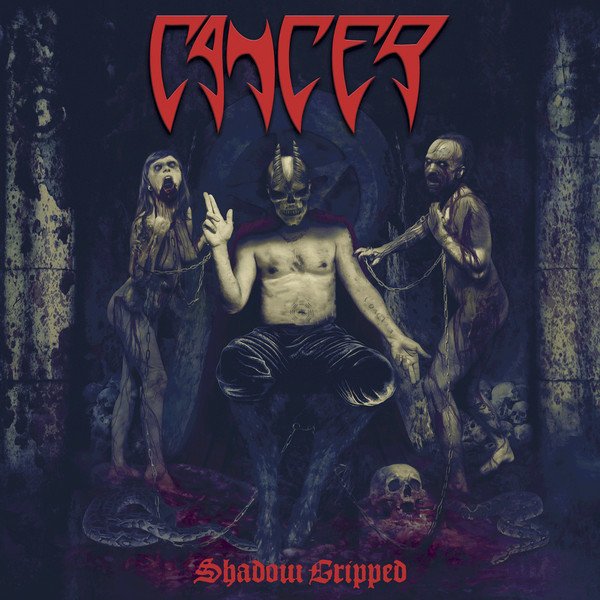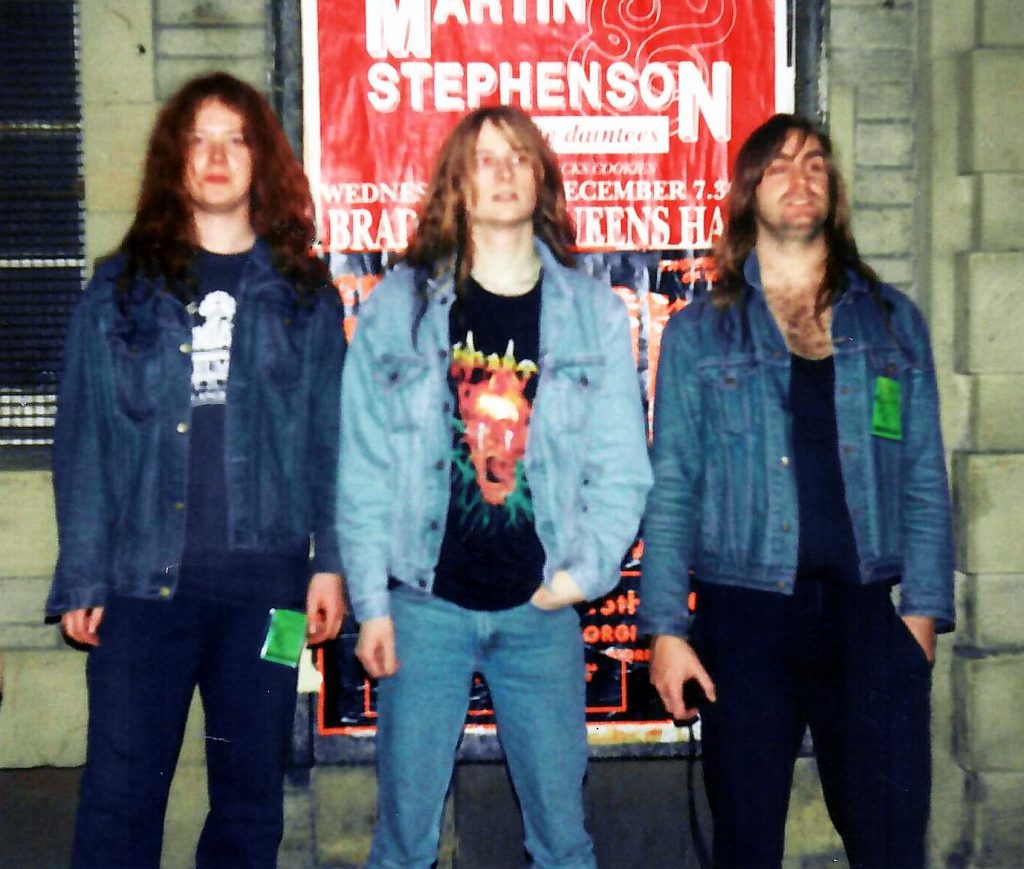
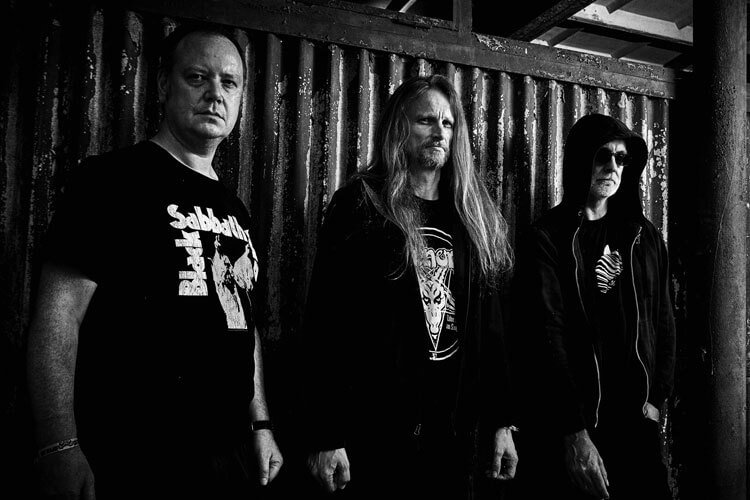
Death metal legends Cancer are back on the scene after a triumphant return on Peaceville Records with 2018’s Shadow Gripped album. Now slimmed down to their original line-up as a trio, the Telford boys have much to look back on in a stop-start career that began in 1988.
As one of the first death metal acts to ink a deal with a major label in the mid-90s, Cancer experienced the pressures and increased exposure that comes with signing to a ruthless global conglomerate. In this interview, we speak to bassist, Ian Buchanan, and discuss the period between 1994 and 1996 when they had Venom’s Tony Bray (Abaddon) managing the band’s affairs and much of their advance for their Black Faith album disappeared into the pockets of the suits doing their bidding.
The subsequent album released on East West Records (Universal Music Group) in 1995 should have been the beginning of a bright future for the group but ended up splitting the band within a year. Scream Blast Repeat made a point of rehabilitating Black Faith for our ‘In Defence Of’ series earlier this year and realised that defending the band’s music was only one aspect of re-examining the album twenty-six years later. As we shall see, the change of direction away from death metal was well underway before signing the deal with East West, and Cancer did not embrace industrial metal to stay in the good books of Universal Music’s A&R department.
The music industry is unrecognisable these days compared to the mega-bucks swishing around in the 1990s when physical CD sales were the cornerstone of business revenue. It would make no sense for any metal band to sign to a major label in 2021 with income decimated by streaming and budgets much smaller. But Cancer’s time on East West Records still serves as an interesting case study in how the corporate villains thought they could profit from death metal and take it into the mainstream.

Let’s start with your favourite absurd story from your time as an artist in the mid-1990s on a major label at East West Records (then part of the Elektra/Atlantic Records subsidiary of Warner Music). We hear about Sepultura’s brutal experience at Epic Records where the A&R guy who brought them on board got the chop and the incoming replacement had no interest in the band. There’s also a story that Columbia/ Sony wanted to send Jeff Walker for singing lessons when Carcass were on their roster. Did East West have similar people in suits who asked you to do things that were ridiculous?
I think the A&R that got us signed might have got sacked, very brutal. I seem to remember he didn’t tell them who the band were when he played them our demo. He waited until they expressed a liking for it and then told them. He quite rightly figured they wouldn’t even listen if they knew it was Cancer! Then there was a situation where we all had tickets for Glastonbury and when asked to film a video for the track ‘Black Faith’, the only thing we stipulated was not to do it Glastonbury weekend. And guess what! They scheduled the recording for that weekend. It was literally the only stipulation we made! I think that was all about exerting control, which backfired spectacularly for them and us. I hasten to add the filming didn’t happen that weekend and we went to Glastonbury, but what a shit storm that was. It was a great weekend in the Somerset sun, though!
What broken promises are you most bitter about from your time with East West Records?
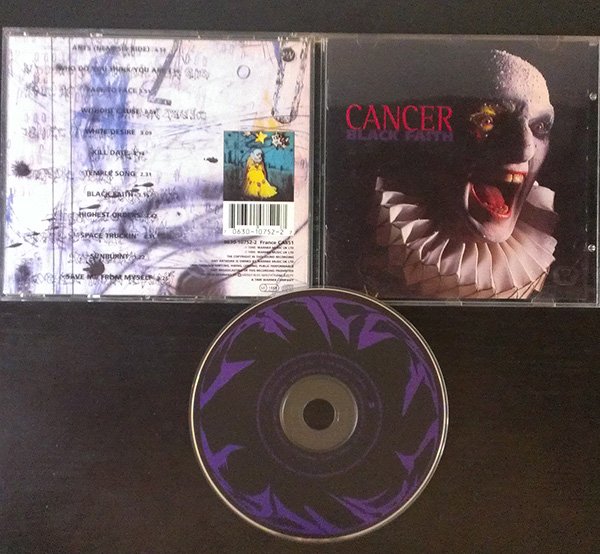
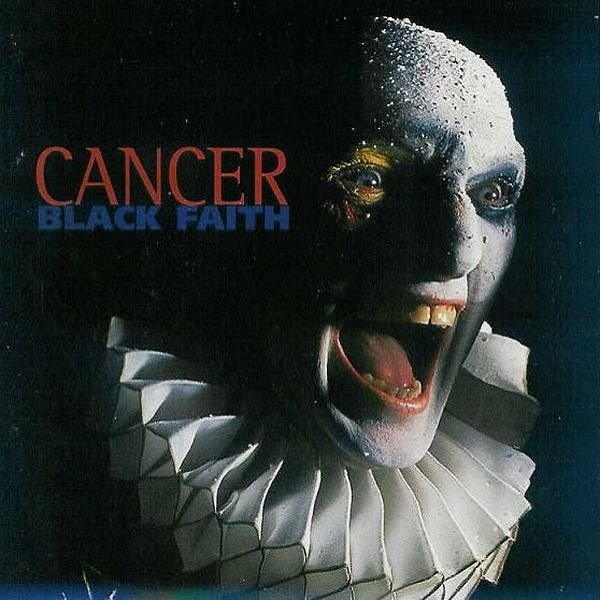
One thing that stands out was the debacle over the album cover. They were steering us very strongly towards the clown theme, and, after a while, we came round to the idea, but the image we chose was completely different and conveyed what I would say was a very different feeling, much more sinister. Of course, they just did what they wanted and put it out with their choice for the cover. The image we wanted did appear in a small box on the back cover, like we were supposed to be happy with that! It was a real kick in the teeth, though, being so pleased and proud of what we had recorded. But not even wanting to look at the cover was incredibly disappointing. The cartoon strip they had produced was made to try and overcome our anger and disappointment at what they had done. It was actually a very cool piece being illustrated by one of the 2000AD artists, so that was something, I suppose. I also remember Tony Bray (Abaddon from the mighty Venom), who later briefly became our manager, came out of a meeting at East West while we were there, clutching the album cover and informed us he thought it was a great cover. I just remember thinking, “Really mate, it’s a piece of shit”, but just said, “Cheers, mate”. After all, when a hero from your teenage years comes towards you clutching your album cover and saying how great it looks, well that’s quite an amazing experience! I still think it funny that he came to meet us in the bar at the Holiday Inn in Telford once. Bloody Abaddon in Telford! Ha, ha.
Tell us about the advance East West Records gave you to record Black Faith. Can you explain to those unfamiliar with the record industry of the 1990s how this worked?
It’s difficult to remember the details, but the big figures you hear bandied about around major label advances can be very misleading. The first part of the advance is for the first album, but the rest comes as later albums are optioned. As each album gets released, the next one will come with a larger advance. But the contracts tend to be complicated, and it all depends on whether the last album hits certain sales targets, etc., as to how big the advance actually is. The figure often quoted is the full advance on say a four-album deal, with each album selling more than the last and hitting maximum sales targets. Another factor regarding advances is just how much seems to disappear pretty much straight away with things like managers’ percentage and all the other “extras”. When you see the breakdown, it’s surprising what you find, including items that you thought were gifts. Turns out there really is literally no such thing as a free lunch with the big labels. That said though, the actual recording budget was a lot bigger than anything we’d had before and enabled us to spend a month at Linford Manor, which was a pretty decent residential studio, and we were able to get the album mixed by Sank (Cybersank), which we were really very happy about. Being big fans of his remixes of a couple of the Killing Joke tracks from Pandemonium, we knew we were in good hands there.
Black Faith was a big departure from the grimy death metal sound of your first three albums. Did you succumb to any outside pressure to embrace the industrial metal groove of Helmet, Ministry and Prong, or was that a unanimous decision by the band?
The change of direction, musically, was fully underway before signing the deal with East West, and most of the music was written before they got involved. We were listening to a very wide range of music – I mean the metal was still a big part of it but by those days we were listening to all sorts, like Skinny Puppy, Download, Laibach , electronic music like the Prodigy and Chemical Brothers, world music, dub, Jah Wobble, Ozric Tentacles – all sorts, really. We were really into festivals like Glastonbury, which was amazing in those days. Walking round the markets hearing stuff like The Grid or wandering down to the jazz world stage and hearing some Moroccan dub or something like that. There was always something new to discover, and I would say we were all like sponges at that time, just soaking it all up. We were smoking a lot of weed, so it all sounded good! We were certainly into industrial and groove metal – Prong, Helmet, Ministry. But as far as industrial goes, I would say, for us, Skinny Puppy was the favourite.
The opening track on Black Faith, ‘Ants (Nemesis Ride)’, is one of the heaviest songs Cancer ever recorded. What were your musical and artistic inspirations for this song?
I am pleased you put it in those terms. I remember hearing it back in the studio when we first recorded it and thinking it was one of the heaviest things I’d ever heard. When the slow bit comes in after the breakdown was so heavy, and dare I say, has a certain majesty to it! As far as influences go, well you have to think we were brought up on Black Sabbath, Judas Priest, then Celtic Frost, Slayer, etc., so there was no shortage of influence for the heaviness. I think we actually wanted to do something that pushed that particular envelope. There is a big difference between heaviness and speed. Just listen to ‘The Sign of the Southern Cross’ by Black Sabbath to see what I mean.
A couple of tracks on Black Faith – namely, ‘White Desire’ and ‘Kill Date’ – embrace a cyber punk vibe but are still metallic in their edge. You may not agree, but they also sound like an attempt to score a hit like Ministry’s ‘Jesus Built My Hotrod’. Was this a conscious decision or did the label force this on you?
As I said before, the music was mostly written before signing to East West, so we were not pushed in that direction by anyone other than ourselves. Not sure ‘Jesus Built my Hotrod’ was uppermost in our minds at the time, but it’s a great song, and I like Ministry very much. ‘White Desire’ flips between the groove metal vibe and the punky madness, but I just think we were trying to do something different rather than scoring a hit. I mean, we were into scoring hits but not the kind you are thinking of!
Other than the chorus to ‘Without Cause’ none of the tracks on Black Faith utilise death metal vocals. Why did you drop this aspect from your sound on this record?
The vocals were recorded after everything else and with the help of our producer, Simon Efemey. I think John tried to do something different to do justice to the music. He pushed himself a lot out of his comfort zone there. I noticed in your review you made a comparison with Jaz Coleman, which I am sure John will be very happy with. That’s the kind of thing he was going for, I think. I actually had a listen to Black Faith a few weeks ago and after all these years was really impressed with the vocals. I certainly don’t think pure death metal vocals would have worked in that context. It seems to divide opinions, though, which I tend to see as a good thing. The best art exists on the fringes.
Black Faith divided critics and garnered mixed reviews upon release in 1995. What was the most unjustified aspect of the criticism you received for this album?
It was all justified, ha, ha. In all seriousness, music is purely subjective, so people can form whatever opinion they want, really. I can see why so many death metal fans would be disappointed with it. I have been disappointed when a favourite band of mine changes and no longer falls within my taste. You can’t please everyone, especially when you are trying so hard to please yourself. Personally, I still think it’s the best album we did, and, for myself, a definite artistic peak. The criticism I really find disappointing is the idea we were forced into changing to secure a major label deal when we were actually being very self-satisfying in our approach and trying to open up to more eclectic influences in a particularly honest way.
You split up in 1996 and cited ‘major label bullshit’ as the main reason for the band’s break up. Can you elaborate on this and tell us what you meant by this?
I think we really struggled with being controlled. Although, musically speaking, we had a pretty free run, the problems came to light later. I would say that the label and management tend to work towards their own interests without really considering the band as individuals. From a management perspective, there is a lot of pressure to conform to the label’s ways. If not, they could find themselves very much on the outside with the chance to impress the big boys blown so to speak, so I can see why it was like that. But at the time, it leaves you feeling underrepresented and manipulated to some extent. It is not really one specific thing but a general feeling that builds up, of being out of control of your own destiny. I mean, that’s the way the world is anyway, but in this situation, it felt particularly acute.
One incident I remember was the time, after the album had been recorded and may even have been released over here, when we were rehearsing ready for live shows, and we got a phone call at the rehearsal room. I was nominated by the guys to take the call, and it was the A&R guy on the phone from LA. He asked me what I would say if Warner Brothers in America said they liked the album and would release it, but only if we change our name for the American market! Well my response was immediate: “Go tell them to fuck themselves.” There was a long pause: “I’m in a meeting with them now. We’re on speakerphone.” “Well in that case, you don’t need to tell them to go fuck themselves,” I replied. Needless to say, the album didn’t get released in America, which, up until then, had been our biggest and most successful market. A great shame and a high price to pay for artistic integrity!
Did the A&R team at East West sit you down as a band and talk to you about commercial expectations and targets for Black Faith? What were their sales projections?
I don’t remember that specifically, which doesn’t it mean it didn’t happen, just my memory is unreliable. There were sales targets in the contract, though, as I mentioned before. There was a lot of over excitement around potential sales that were unrealistic. And to be fair, we got sucked into that way of thinking. Getting over excited, although in our case we were mainly just highly excited by what we had written and recorded more than anything else. We were extremely pleased with ourselves, so when phrases like “a million sales is a million ales” get bandied about, albeit to some extent in jest, you do get carried away with it. Good thing is, reality bites in the end, so it’s a good steep learning curve. A very useful life lesson!
A little-known band called Meshuggah supported you on your European tour for Black Faith. What do you remember about them from your time together on the road?
Do you know, I really don’t remember much at all about doing gigs with Meshuggah. Don’t know why I don’t remember that much, but they certainly went on to be quite a success story. I do remember doing a killer tour with Skyclad, though. They were great, and we were on fire on those gigs. It looks like a pretty incompatible bill, but we turned a few heads, as I remember, and surprised a few people. Certainly, a positive experience from that time.
What is the pressure like when you’re an artist on a major label compared to being on an independent?
The situation with Vinyl Solution [Cancer’s label for their first three records] was totally different in that regard. We were out of control in those days, but it didn’t seem to bother them too much. I mean, dealing with extreme metal and punk bands out of control should be the way it is! Budgets were a lot smaller, so that brings some pressure, having to get things done in shorter time scales. But on the other hand, expectations were much higher with the major label budget, so there was pressure there to meet a very high standard, recording-wise. Then there was the pressure to play the game, media schmoozing sort of thing. We were not always very good at that. Tended to say what we think, which wasn’t always what they wanted to hear. I remember our A&R man asking us if we wanted a picture with Vanessa Warwick whilst we were at the MTV studios once. Without thinking I said, “No thanks, we look bad enough on our own,” which I thought was a pretty funny line at the time, but she didn’t laugh. That sort of thing didn’t go down well at the time but… he-ho. To be honest, we tended to get wasted a lot, so that would diffuse matters. Although looking back on it, it does still build up and accumulate, so perhaps not necessarily the best approach!
Final question. Looking back now, how do you view Black Faith after all these years?
Personally speaking, I think it is a great album and having listened to it recently it stands the test of time. If anything, in some ways, it was ahead of its time, so that doesn’t surprise me. I’m proud of it, that’s for sure.
*** You can read our article, In Defence Of… Cancer – Black Faith (1995), here.***
*** Cancer released their latest album, Shadow Gripped, via Peaceville Records on 2 November 2018. ***