
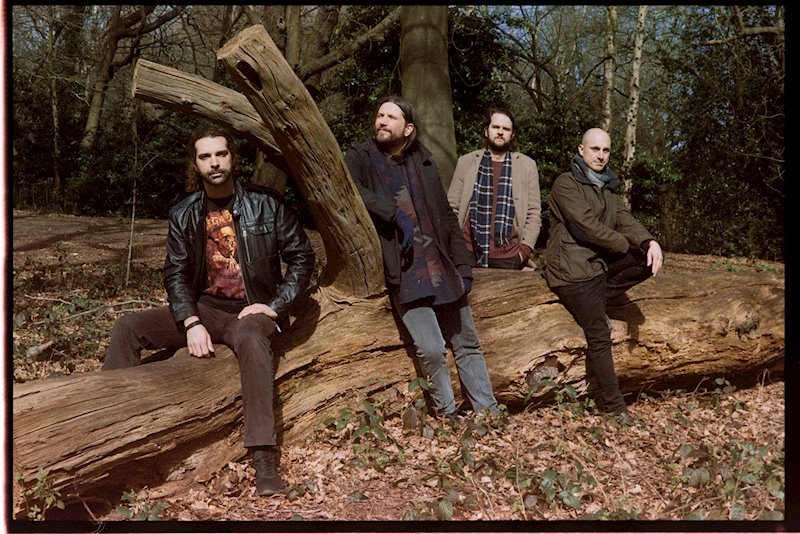
There’s nothing typical about Dawnwalker, including their decision to release their latest album in December 2020 when most publications have their best-of-year lists ready for publication. The staff at Scream Blast Repeat can say with certainty that Ages would have made the SBR Top 40 Albums of 2020 if Dawnwalker released it earlier in the year.
Behind the music is Londoner, Mark Norgate, a man who cites Kate Bush and Opeth as equal influences on his art. The sound in his head is a cauldron of extremes from delicate beauty to hyper aggressive rage filtered through a post-metal template. Here, the avant-garde meets extreme metal and art rock in an effortless blend of ideas. Fans of bands as diverse as Neurosis and Pure Reason Revolution will cherish this record after two minutes of streaming it through their headphones.
One listen to Ages is enough to convince you that you’re in the presence of something unique and special. It prompted Scream Blast Repeat to track down Mark Norgate to learn more about his latest masterpiece.
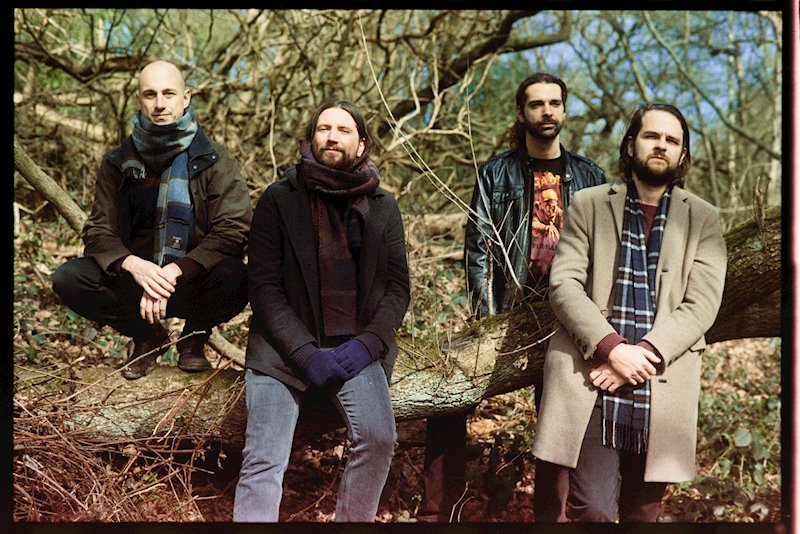
Let’s start with your current album, Ages. We’ve listened to this at least ten times and still cannot classify your music. Experimental metal, avant-garde metal, progressive post-metal – none of these seem to fit. How would you describe your music?
We have great difficulty in describing it as well. It’s not really a consideration when writing the music, and it’s only when we come to release it that it becomes a question of how we’re going to describe it. Broadly, I would describe us as a post-metal band, but, then again, that label brings to mind a lot of bands that I don’t think we have much in common with. We semi-jokingly described ourselves as “green metal” when we released Human Ruins, but that doesn’t seem to have stuck for some reason. Can’t think why.
The two influences we picked out when reviewing Ages are Neurosis and Toby Driver’s work in Maudlin of the Well and Kayo Dot. How accurate are these observations? Who were the main influences on your latest album?
Oh, of course, both of those have been an enormous influence, not only for their incredible music but the way they conduct themselves in relation to the music industry, too. Neurosis are the pioneers, and I think that every modern/post metal band owes them a great deal, and Toby and his various projects are at the vanguard of pushing rock music forward into strange and exciting new places. There are a few other modern metal bands I could mention – Opeth, Mastodon, Tool, etc., but there’s also the prog, melodic side which comes from listening to a lot of King Crimson, Yes, Led Zeppelin, Kate Bush and even the Moody Blues. I love a lot of 70s music, and I’m a sucker for a concept album.
A couple of passages on Ages delve into atmospheric black metal. What gave you the inspiration to explore this type of dynamic?
There is definitely a black metal influence in our music even if it’s one we only indulge sparingly. In the most tumultuous passages of this album I was thinking about these scenes of great disruption – the shifting of the tectonic plates, tidal waves, great forests being burned – and it felt like the music needed to go to extreme places in those instances to suitably capture the atmosphere.
You formed in 2012 and have three EPs and three albums to your name, including the latest one. Why are so many people still not aware of Dawnwalker when you’re producing music of such great quality?
It very much started out as a home/studio project, and we didn’t do such a good job of promoting ourselves in the early days. Learning how to release music and get it heard by people has been a long and slow process which we’re still trying to improve on. As a live band we’ve only been active sporadically, so that’s something we hope to change, too. All that said, we’ve been very happy to cultivate a small but loyal following on the way.
Ages is a self-released album. What conversations did you have with record labels before releasing it in December 2020?
Very few to be honest, and those we did have didn’t really seem to be that promising. All of us have been in various bands and making our own records for years now, so we’ve gotten to a place where we’re comfortable self-producing and distributing our music, albeit in a small-scale way. We’ve always considered that our music would have a fairly niche appeal, but since we’ve been gaining a bit more attention with the last album or two it might make more sense to think bigger as we go forward.
Perhaps the most surprising aspect of Dawnwalker is the extremity of the heavy parts of your songs. This is what might confuse the listener of more conventional metal because it’s like somebody said to you, “Go away and write the heaviest guitar music imaginable, but you cannot listen to any developments in metal in the last thirty years for inspiration.” As a result, your guitar work seems to contain no traces of traditional pentatonic rock. What are your thoughts on this?
I think there are certainly traditional elements in there, but I guess we always try to find our own angle on it. Let’s face it, the typical rock and metal tropes are pretty well-worn territory by this point and there are thousands of bands who do them far better than we ever could. We’re trying to find our own identity and hopefully come up with our own sound in the process. I think extremity is relative as well. For me there are songs of ours that I consider the most extreme because of the emotional or lyrical content over ones that have blast beats or the heaviest riffs.
You are the sole songwriter in Dawnwalker, and this always creates a bit of suspicion about the personality of the artist. Can we read into this that you are a control freak who is reluctant to incorporate the ideas of other contributing musicians?
Absolutely. Nobody likes the asshole who takes all of the credit, right? When Dawnwalker started, I was still playing in other bands which were more collaborative and I just decided that this project was going to be about following personal obsessions and narrative storytelling, and it’s difficult to do that with multiple people contributing ideas. So, essentially, it’s just about following conceptual ideas to their logical extremes – for better or for worse! But all of the guys in Dawnwalker are great musicians and songwriters in their own right and play in multiple bands, so it’s certainly no disrespect to their talents.
What criticism, if any, did you receive for exploring more longform compositions on your latest album compared to previous releases?
Generally, the reaction has been very positive, but I think inevitably we were going to alienate some people with the longer songs. To my mind, I don’t think of Ages as being all that different to our previous albums. You can think of something as a twelve-minute song or as a few four-minute songs that are weaved together in a certain way – as passages or movements within a larger structure. I always think with each album you need to find a new approach, and, this time, there were these bigger themes involved that just seemed to lend themselves to longer song forms. Maybe for the next album we’ll write two-minute songs, or one forty-five-minute song.
We understand you live in London, so why did you decide to record Ages in Manchester?
We’d gotten into some set ways of working, so it was just a way to change things up and work with some new people. We’d made a bunch of records in London and just fancied a bit of an adventure, I suppose. While we were thinking about how we could record the next album we became aware of Joe Clayton’s work with his band Pijn, and he’d also produced a few other records we liked that lived in a similar world to us, so it was just kismet in the end, I guess!
Your vocal range is impressive. Which singers did you take inspiration from when writing Ages? Did you learn any new vocal techniques leading up to this record?
Thank for saying so, but to be honest I think of myself as being quite limited which is why there are usually several vocalists on our albums! Dane contributed his low death growls and Robin added a lot of choral layers and harmonies, all of which added extra dimensions. I can imagine us varying things up even further in future where I take less of a prominent lead role and there’s more of a vocal ensemble.
But as for vocal inspirations, to name just a few all-time favourites: Björk, Cedric Bixler-Zavala, Kate Bush, Mikael Åkerfeldt, ABBA, Jessika Kenney, Ihsahn, Rose Kemp… too many to name!
Final question: It’s just as likely the audience at a Dawnwalker gig will be wearing Modest Mouse t-shirts as much as denim jackets with Slayer patches. What have you noticed about the types of people who listen to your music?
I do think that is pretty true and mostly I’m pleased that people still find us accessible even if they aren’t necessarily into black metal or whatever. We’ve had a few people tell us that we were a gateway band into heavier or weirder stuff, which is gratifying. We live in an age where almost all recorded music is available at the touch of a button, so things have definitely become more cross-pollinated, which is a good thing to my mind. Genre is dead, anyway!
*** Dawnwalker self-released Ages on 4 December 2020. You can read the original SBR review here. ***