
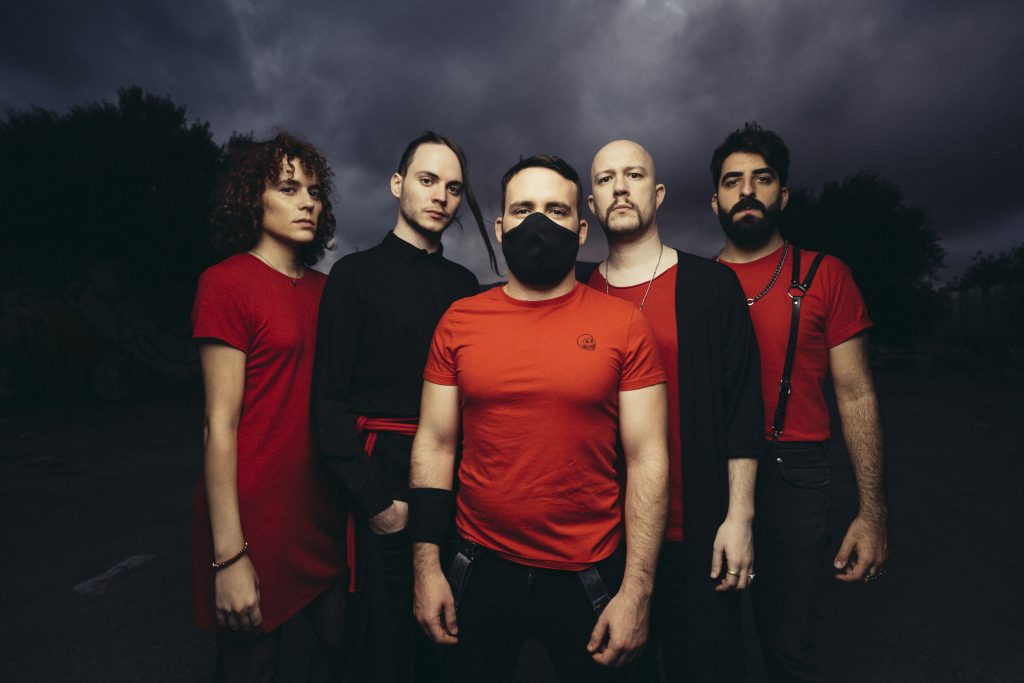
The metal underground knows Barcelona misfits, Obsidian Kingdom, for their eclectic style and the fact that three of their group also perform in Myrkur’s live band. But their latest album takes things to a whole new level. Anybody unfamiliar with the Catalonians are in for a shock when they hear Meat Machine. Nobody sounds like this, but Daughters might be the nearest comparison. One minute you’re in a post-metal conundrum, the next moment they ensnare you in a new wave bubble.
The Spanish quintet are a band of many identities. Synth player and co-vocalist, Jade Riot Cul, adds a sultry female tone to the muscular vocals of Rider G Omega, giving the music a unique juxtaposition. Lyrical themes of sexual self-discovery and the anxiety that comes with it are at the forefront, all packaged in the dark thrill of a heavy ride that can derail at any moment. The smear of lipstick they plant on your face could easily be blood.
In our review of Meat Machine here we applauded how the band ‘dress like members of a Berlin cabaret troupe and tease you with glorious pop moments and demented metallic aggression without succumbing to either.’ Could this be the band that finally steps up to take the mantle from Faith No More as metal’s most sordid experimentalists?
We spoke to guitarist and vocalist, Edgar (aka Rider G Omega), about the themes and ambitions of their latest record.
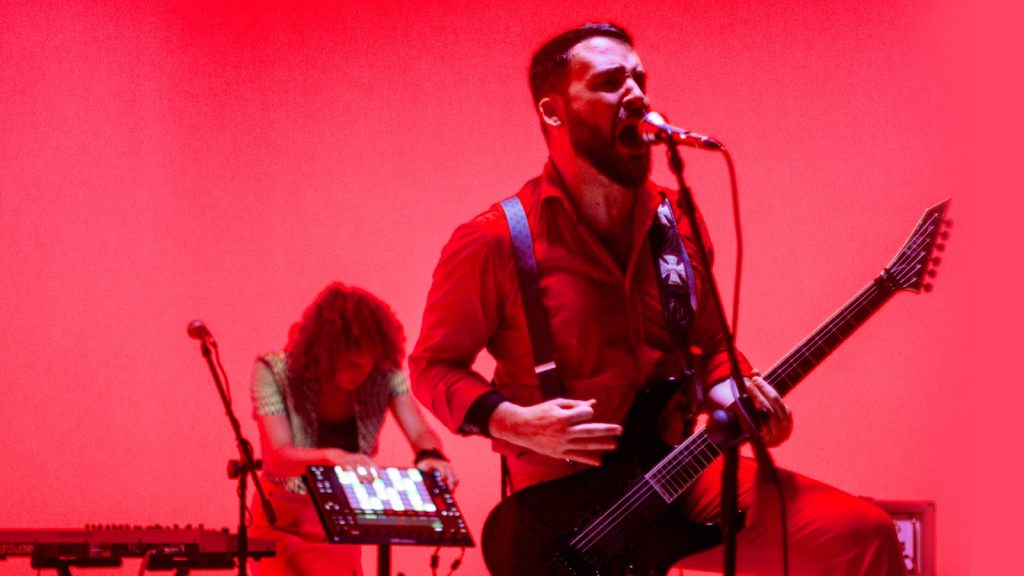
You released your latest album, Meat Machine, in September 2020 via Season of Mist. This is your third record to date. How would you describe the sound of Meat Machine?
Meat Machine is a very frantic record. It was written under stressful circumstances, and it clearly reflects that anxiety. It circles around themes of self-discovery, existential angst and the complications of desire – with evident sexual innuendos and something similar to social commentary. It feels enticing, ominous and rather volatile. It is all over the place, really. Like a rushed essay on the modern human soul – confused, angry and pathetically grandiloquent.
We’ve strived for a sound that would channel both the aggression and the complexity of the issues at hand, that would feel powerful and abrasive but at the same time adventurous and quirky. For the most part it features roaring and distorted industrial rock, but it often transits to weird soundscapes that feel more akin to synth pop or a horror movie soundtrack. We had no clear agenda in terms of style when we were writing it, to be honest. It’s more like we were desperately chasing something that was rapidly tumbling down the stairs.
The Santiago Horror Film Festival recently awarded you the ‘Best International Music Video’ for the song, ‘Meat Star’. Tell us more about how this works. Who nominated you for the shortlist and how did they notify you of the prize?
Our ex-manager Unai happens to live in Santiago de Chile now, and as soon as he saw the ‘Meat Star’ video, he told us about the festival and suggested that we apply to the international video category. He thought that it was right up their alley in terms of style and content, and he also mentioned that the notable references to the cinema of Alejandro Jodorowsky in the video might be an ace up our sleeve, since he is Chilean and obviously a celebrity there. And alas, they thought it was the best!
Sadly, this year the festival was only held digitally because of Covid-19 restrictions, so we didn’t get to travel to Santiago to receive the price… But it’s a huge honour, nonetheless.
Themes of frustrated sexual desire come through on your latest record, more in the manner of a Michel Houellebecq novel than anything else, although there are elements of comedy as well. What do you say to the critics who say this is yet another piece of art depicting the sexual misery of living in a market society?
I’d tell them that they are a bit short-sighted… Yes, some of the songs are on the verge or criticism of how we consume and enjoy sex in modern times, but most of them try to approach the misery of sexuality within its own self, regardless of western capitalism.
The formation of a sexual identity is an incredibly complex process, and always an on-going process in fact. Getting to know one-self sexually is a complicated enough thing to do, let alone communicating it to others. Furthermore, most of the times personal sexual preferences have nothing to do with one’s systems of belief, or one’s social or legal habitat, and often these things can even come into straight contradiction with one another. That very struggle, along with the fact that we’re somehow innocent of our own sexual configuration, is what we wanted to tackle in the album.
Also, it’s not all misery: for example, the song ‘Spanker’ is, on the contrary, a celebration of the discovery of one’s own sexual quirks and paraphilias, however much they may stray from social acceptance or political correctness.
Obsidian Kingdom take pride in their music being hard to categorise. In our review we said: “This is metal of the art school rather than the old school… Think Faith No More, but with Neurosis, rather than Slayer, as the inspiration for the heavier moments.” There has always been a void for metal with avant-garde leanings since Faith No More left the scene in 1998. Yes, they returned in 2015 but a lot has changed since then. How do you respond to people who say Obsidian Kingdom are the band that can fill that void?
Perhaps so, but I really don’t think we’re avant-garde because we want to be thus, but rather because we still haven’t found a language that we’re fully comfortable with. And maybe we will never do, who knows? It would be much easier for us to develop a particular style that worked and just keep to it, but the truth is that we haven’t yet, maybe because we just don’t know how… Anyway, it feels good to fool around!
But back to your question, we really don’t intend to dwell in a certain niche; even though I agree in that avant-garde rock or art-rock is a boundless enough genre for us to identify with. I certainly see the parallelism with what Faith No More did back in the day (and we feel extremely honoured because of that comparison!).
The last song on the album, ‘A Foe’, seems to talk about the thrill of being slaughtered by a serial killer from the perspective of a woman. This may be a misinterpretation, but can you tell us more about this song?
No such thing as misinterpretation when it comes to art! And in this case, your guess is actually quite close to what we had in mind when we wrote it…
Some years ago, I came across a horrific piece of news about a trans woman who was beaten to death by a bunch of men – a hate crime without provocation, an execution in cold blood. The pictures were appalling. She was sitting in a pool of her own blood; her gaze lost in the infinite, waiting for the end, while her torturers mocked her and filmed the whole scene. I instantly felt profoundly disturbed by it, and within minutes I had produced a poem. It was as if it had effortlessly come out of me, as if the victim were guiding my hands to write her last words. And I felt a kind of peace, as if Christ were forgiving the violence of the crucifixion. I didn’t know what to do with it, so I let it rest in a drawer for some time.
Months later, while we were writing the album, Irene brought a beautiful and melancholic song to the rehearsal and told us she had no lyrics for it. I suddenly remembered my stored poem and gave it to her, without any explanation. She loved it and wrote a melody for it, which became the first part of the song. She told me she thought it was about a breakup. When I revealed my source of inspiration, we agreed to write a different ending for the song, more appropriate to the matters at hand, which would eventually become the ending for the album.
The post-metal influence is apparent on Meat Machine. Which bands of this genre do you take inspiration from?
In all honesty, we don’t listen to all that much metal these days, “post” or otherwise, so the main influences for Meat Machine don’t come from that genre. But we do listen to some – we’re for example big fans of Cult of Luna (we have actually opened for them, remixed one of their songs and we even had one of their members master the album). They represent some of the things that we love most about metal: the weight, the tragedy and the overwhelming sound that puts you in a trance-like state. Amenra are also at the top of our list, although they are so particular that we cannot say that we’re drawing any direct influence from them. And, of course, we’ve always been very keen on acts like Neurosis, ISIS, Mastodon and Swans, which I guess really shows in our record.
Which albums were you listening to when writing Meat Machine?
There were some that we had on repeat during that time: Ulver’s Assassination of Julius Caesar taught us the bravery to step into unknown territories and just naturally follow our curiosity; Scott Walker’s The Drift has always been by our bedside, and from it we take the sense of dreadful drama and how the lesson to communicate the mystery through riddles; anything from Death Grips, but mostly The Money Store and No Love Deep Web, both violently bizarre and with that admirable “anything goes” attitude; and one of the albums that has shocked the most in the last decade, Daughters’ You Won’t Get What You Want, of which we’ve tried to emulate its cathartic negativity and ability to terrorize.
The chorus to ‘Vogue’ is so catchy and coated in erotic anxiety. The staff at Scream Blast Repeat all agree this is one of the finest songs of 2020 and could easily gain mainstream radio play. What discussions have you had about releasing this as your next video-single?
Why, thanks! It still sounds weird to us to this day. It was one of those choruses that I had in my mind for years, and it finally found the perfect song to sneak into… That falsetto is absolutely cringy, but maybe it’s precisely that embarrassment which makes it so catchy. The whole song feels a bit off to be honest, and not only because of the lyrics. But we let the song become what it wanted to be, and it was not an easy task… As often, it went through countless iteration before it got to its current state.
A music video? Yeah, maybe, why not?
You will be opening for Enslaved and Intronaut in May 2021, including four shows in the UK. Both these bands are titans of progressive metal. Some already call your music progressive metal. Is this something you will embrace more in the future?
I really don’t know; we never know where we’re headed to next! But in hindsight, I think that the opposite is actually happening – we’re moving away from progressive music. We try to keep things more simple now, and we only go into weird time signatures when we really feel like it, which is not as often as we used to. Prog music has a component of technicality and (sometimes totally unnecessary) musical complexity that doesn’t always help in getting the message across. But at the same time, it is such a vague and inclusive label that it has come to mean nothing at all, and both Meshuggah and Steven Wilson can be “prog” at the same time.
But like I said, who knows?
We think your ideal touring partners would be either Baroness or Icelandic extreme metal experimentalists, Cult of Lilith. In your opinion, which bands share the same type of live audience as Obsidian Kingdom and would make good partners on the road?
That is a difficult question because, no matter who we’re touring with, we always feel like the oddball! We really can’t think of a band that would be the perfect match but, at the same time, we transit through so many genres that we have the feeling that many acts would complement us so well.
Baroness would be of course one of them; we’ve never listened to Cult of Lilith, though! Other names that come to mind are Cult of Luna, Deftones, Zeal & Ardor, Cave In, Oranssi Pazuzu, GOLD, Black Midi or Code Orange. I guess we just described the average Roadburn line-up, ha,ha.
Barcelona is not known for producing metal bands on the international stage. Which bands from your city should we know about to review in the future?
I don’t know whether you know them already, but you should definitely check out Foscor. They’re also on Season of Mist, and they’re not only good friends of ours but they also produce unique, excellent music. Much like us, they’ve been twisting and turning to find their own language and changing along the way. Although they travel at their own speed, their path is impeccable, very interesting and worthy of admiration. Their music is emotional, moving, melancholic and terrifyingly beautiful. Give them a go.
What kind of musical recognition do you get in Spain and how did the album perform in the charts in its first week of release?
We have a decent following in our homeland, as it should be. I think that precisely because not many bands come out of Spain, our national audience really appreciates the fact that we’ve “crossed over”, and our own country is still the territory where we can summon a bigger audience (which speaks volumes about the good health of the metal/rock scene here, in spite of what rumours might say).
We never look at the charts because, honestly, we’re still not that big and have never made it to any thus far.
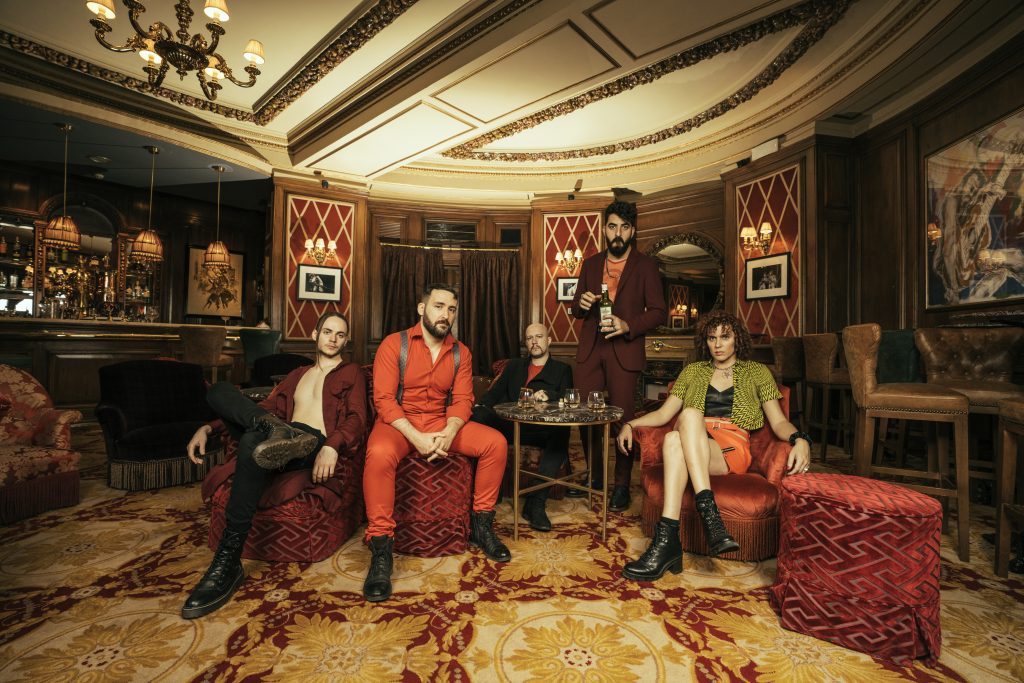
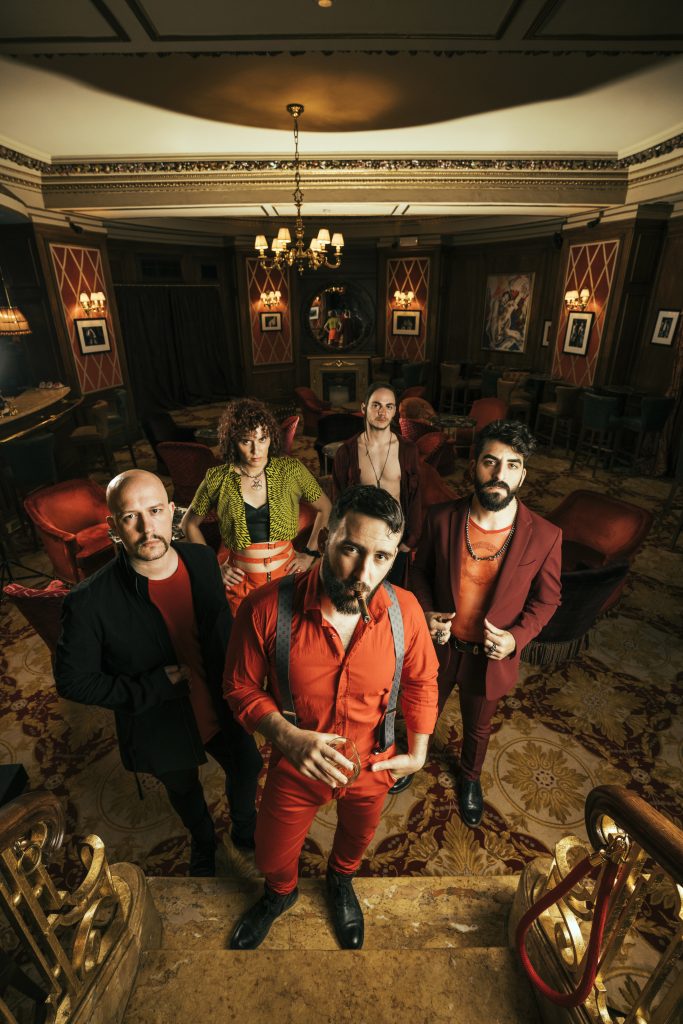
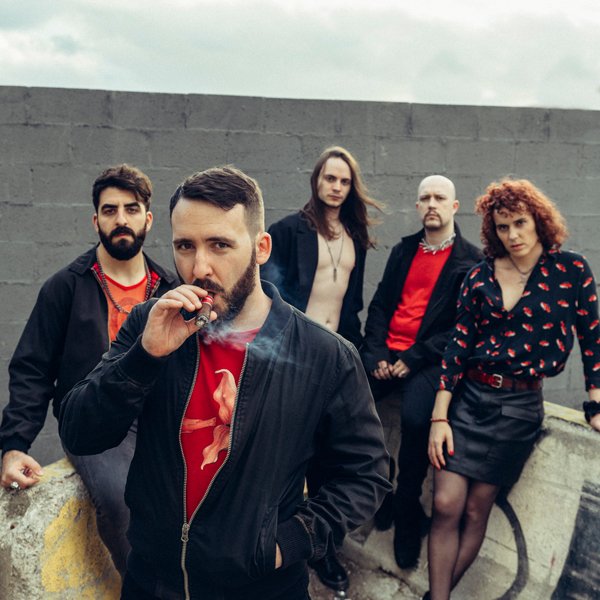
Finally, the band’s image has a shared aesthetic, like Kraftwerk in The Man Machine era. Tangerine and crimson red are the common colours in your promo images. What look were you going for on this album?
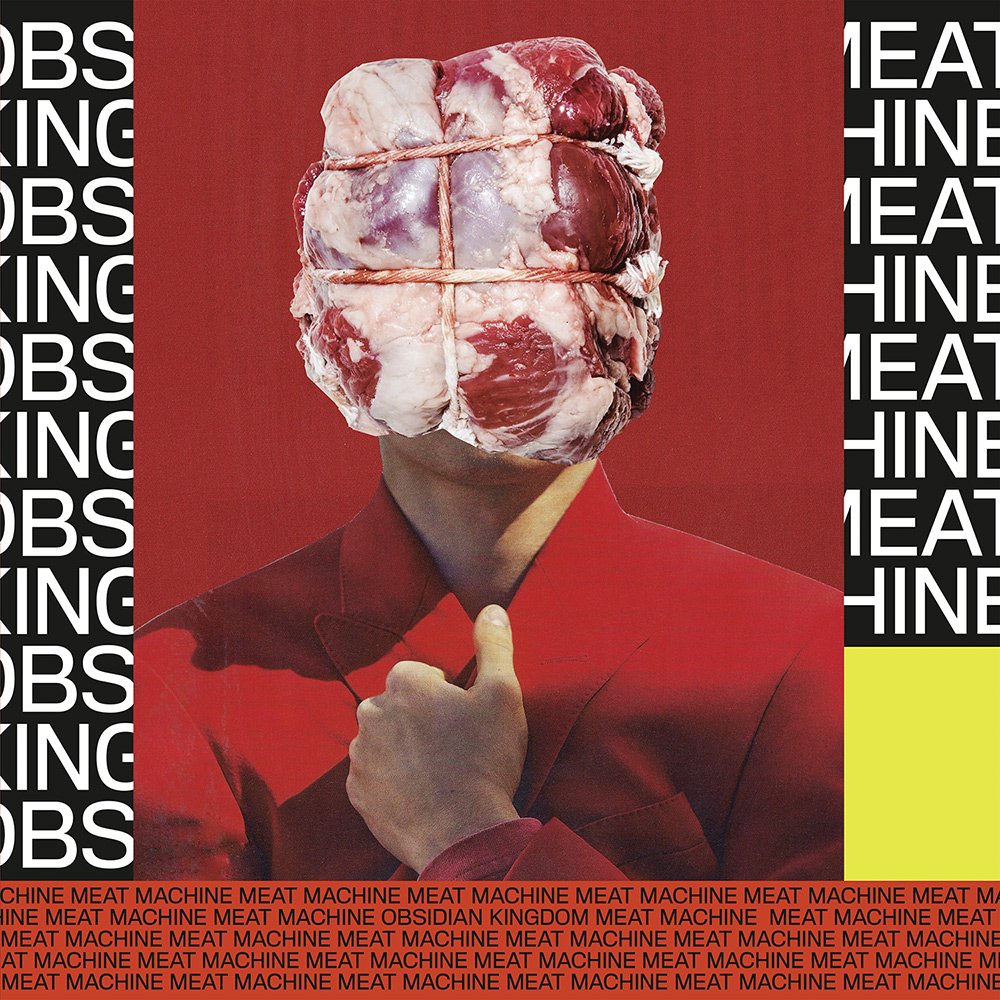
One of our main inspirations was the album’s artwork, penned by our long-time partners in crime, Elena Gallén and Ritxi Ostáriz. It is inhabited by weird characters that seem to have spawned out of a bad dream or a painting by Magritte – they feel modern and timeless at the same time, like out of place but under the spotlight, as elegant as they are repulsive. We were looking for a theatrical look this time, with improbable colours and extravagant outfits, halfway between a travelling circus and a dystopian gang. We’ve drawn elements equally from Alex and his droogs, from traditional Far-East fashion and from the “modern classic” style of brands like Allsaints. In all honesty, the Kraftwerk reference was completely unintended, although it is very fitting.
Another influence was the characters from Jodorowsky’s and Kenneth Anger’s films, especially in regard to their use of colour and volume with symbolic purposes, while retaining the palette that we chose for the album: red, yellow, purple and black – the deconstructed chromatics of meat.
*** Obsidian Kingdom released Meat Machine via Season of Mist on 25 September 2020. Read the Scream Blast Repeat review here. ***
*** You can view their award-winning video for ‘Meat Star’ in the YouTube link below.***